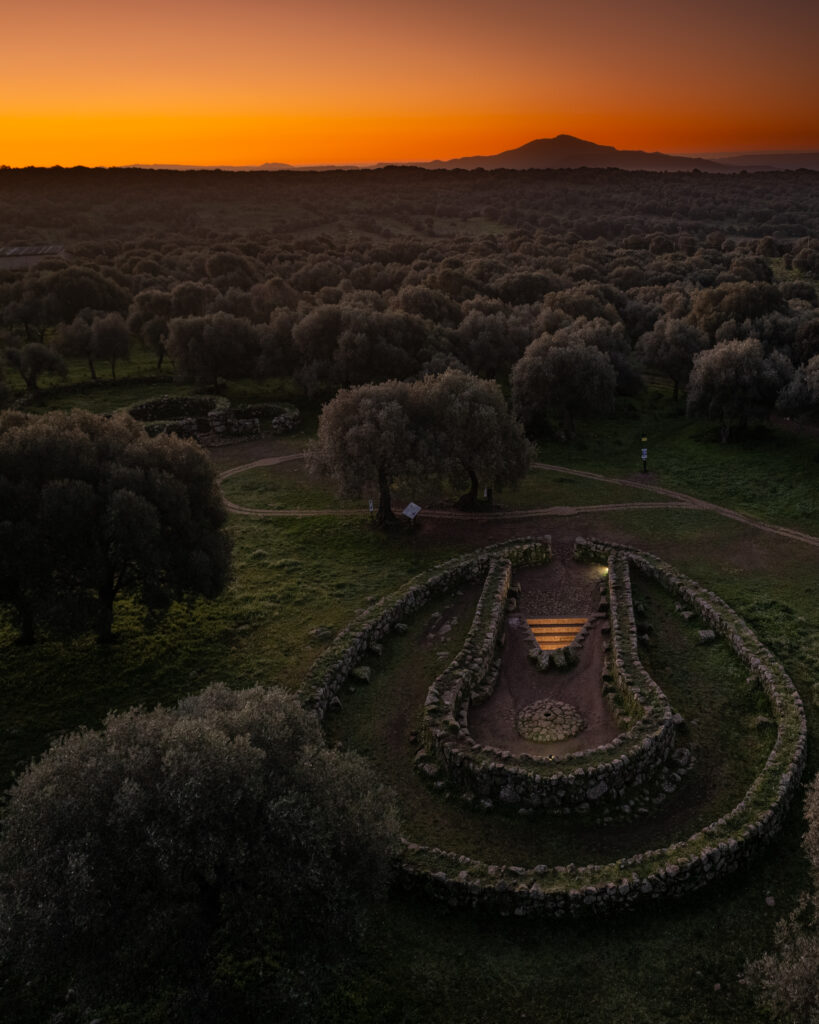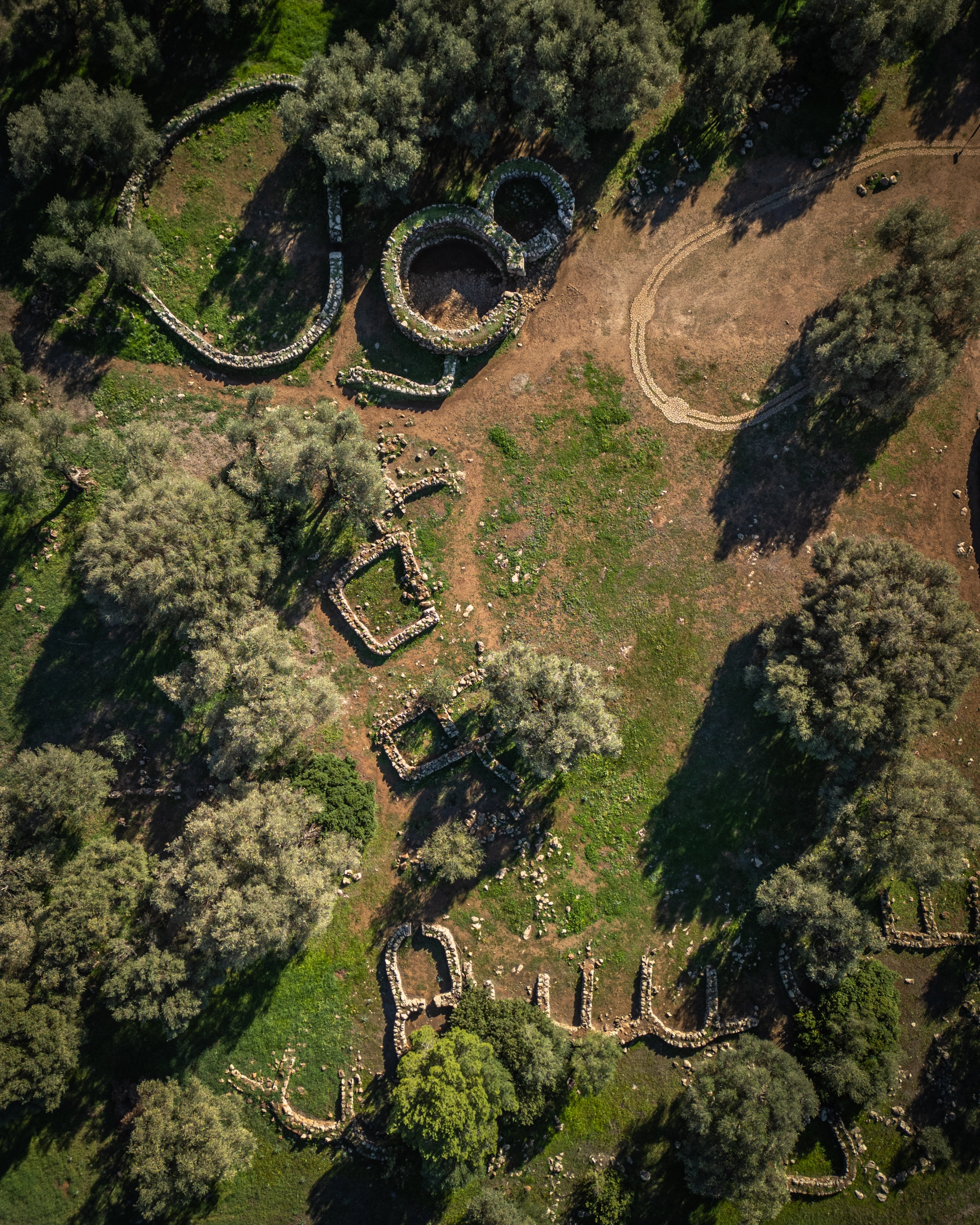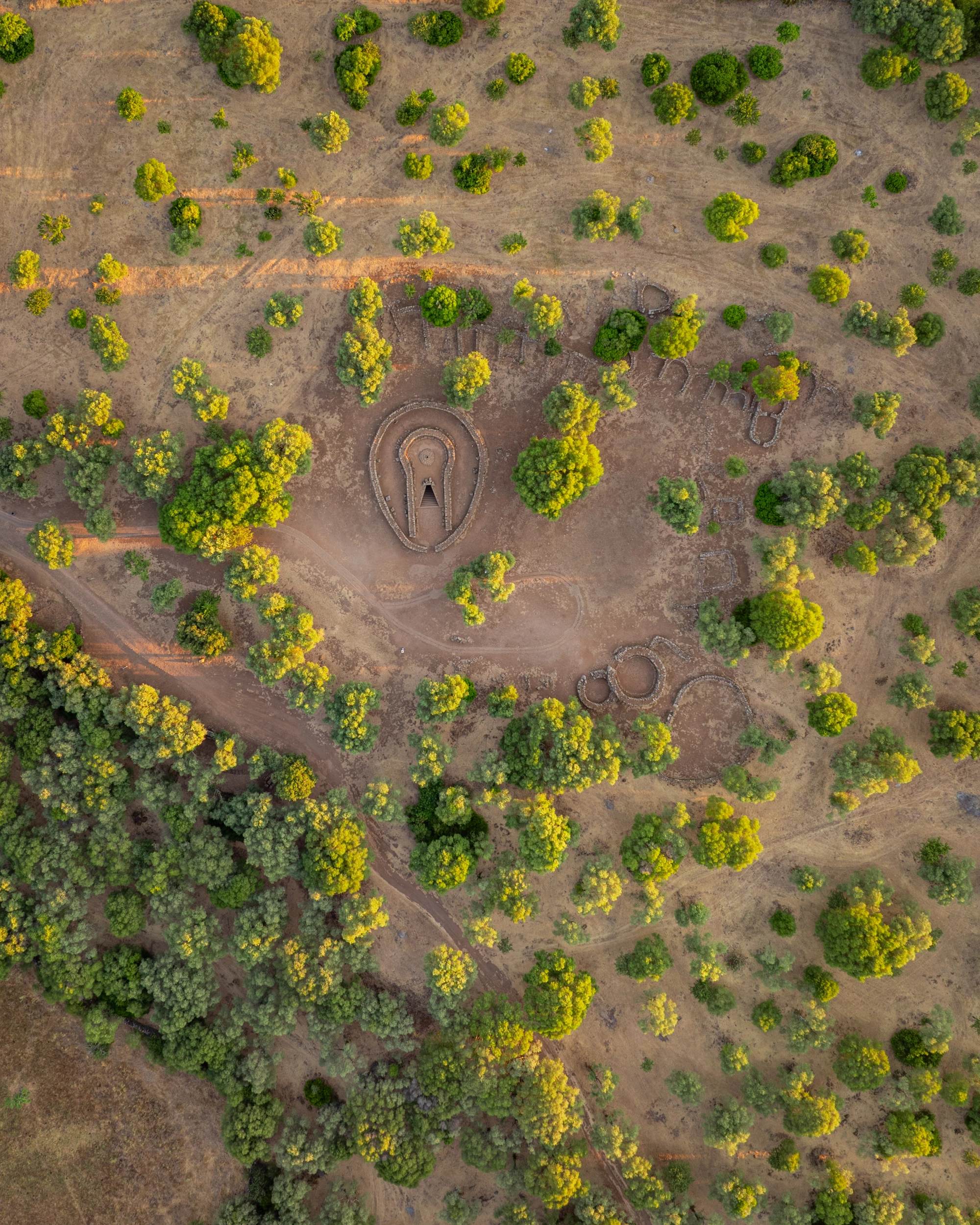
The Sacred Well of Santa Cristina Archaeological Site, in Paulilatino, is best known for the equinox phenomenon, when sunlight illuminates the water in the underground chamber. Yet this masterpiece of Nuragic architecture is linked to an even rarer and more spectacular astronomical event: the major lunar standstill.
Every 18.6 years, the site becomes the stage for a remarkable phenomenon. At this moment, the Moon reaches the maximum extent of its celestial cycle and, thanks to a precise architectural alignment, its light reflects perfectly in the sacred water of the well.
This event, uniting astronomy, religion, and nature, once again demonstrates the profound celestial knowledge of the Nuragic builders, who transformed stone into an instrument of extraordinary astronomical precision.
What Is a Lunar Standstill?
To understand the phenomenon, it is essential to clarify the meaning of lunar standstill.
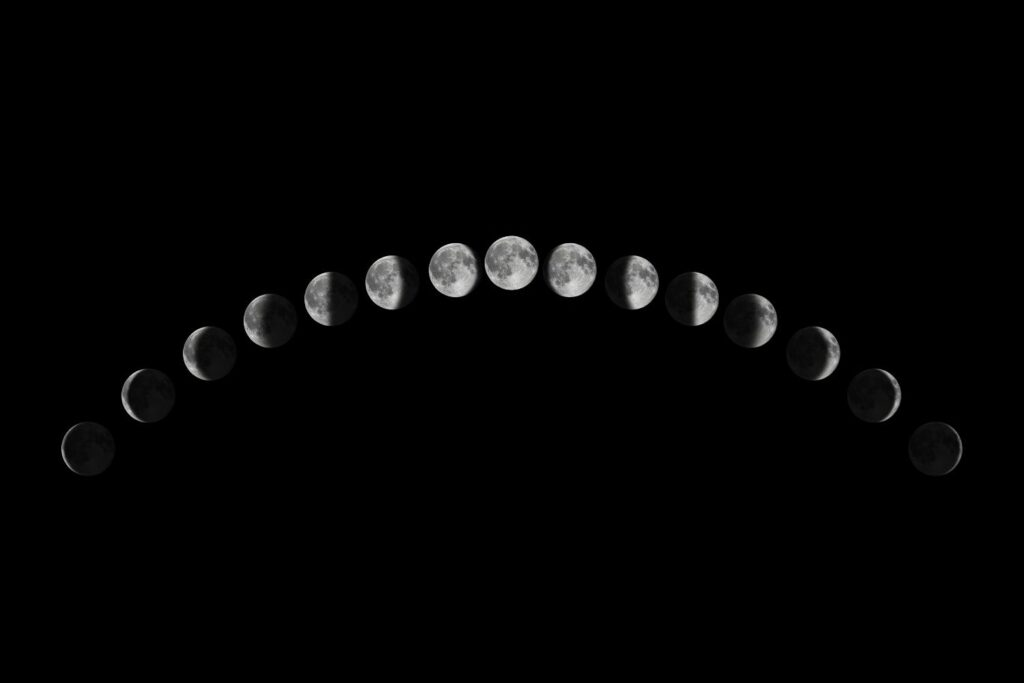
As the Moon travels across the sky, its rising and setting positions gradually shift along the horizon. Over a cycle of approximately 18.6 years, it reaches extreme northern and southern positions known as major and minor lunar standstills.
During a major lunar standstill, the Moon attains its highest and lowest possible declinations, appearing in positions it will not reach again until the next cycle nearly two decades later.
For ancient cultures, this was an extraordinary event: a moment of cosmic renewal, symbolizing balance and cyclicality, marking the relationship between community, nature, and the divine.
The Lunar Standstill at Santa Cristina
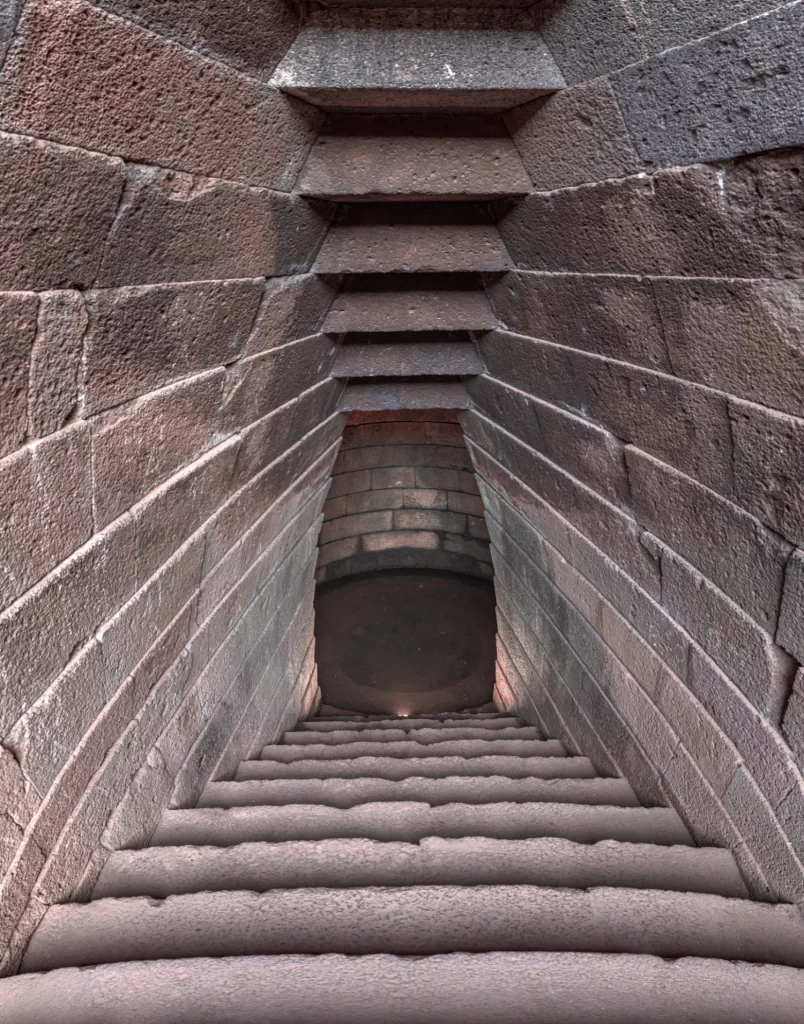
The Sacred Well is oriented so that, during the major lunar standstill, the full Moon aligns perfectly with the axis of the trapezoidal staircase and reflects in the water of the hypogean chamber.
The phenomenon unfolds in this way:
- Moonlight enters through the vestibule and descends along the steps of the staircase.
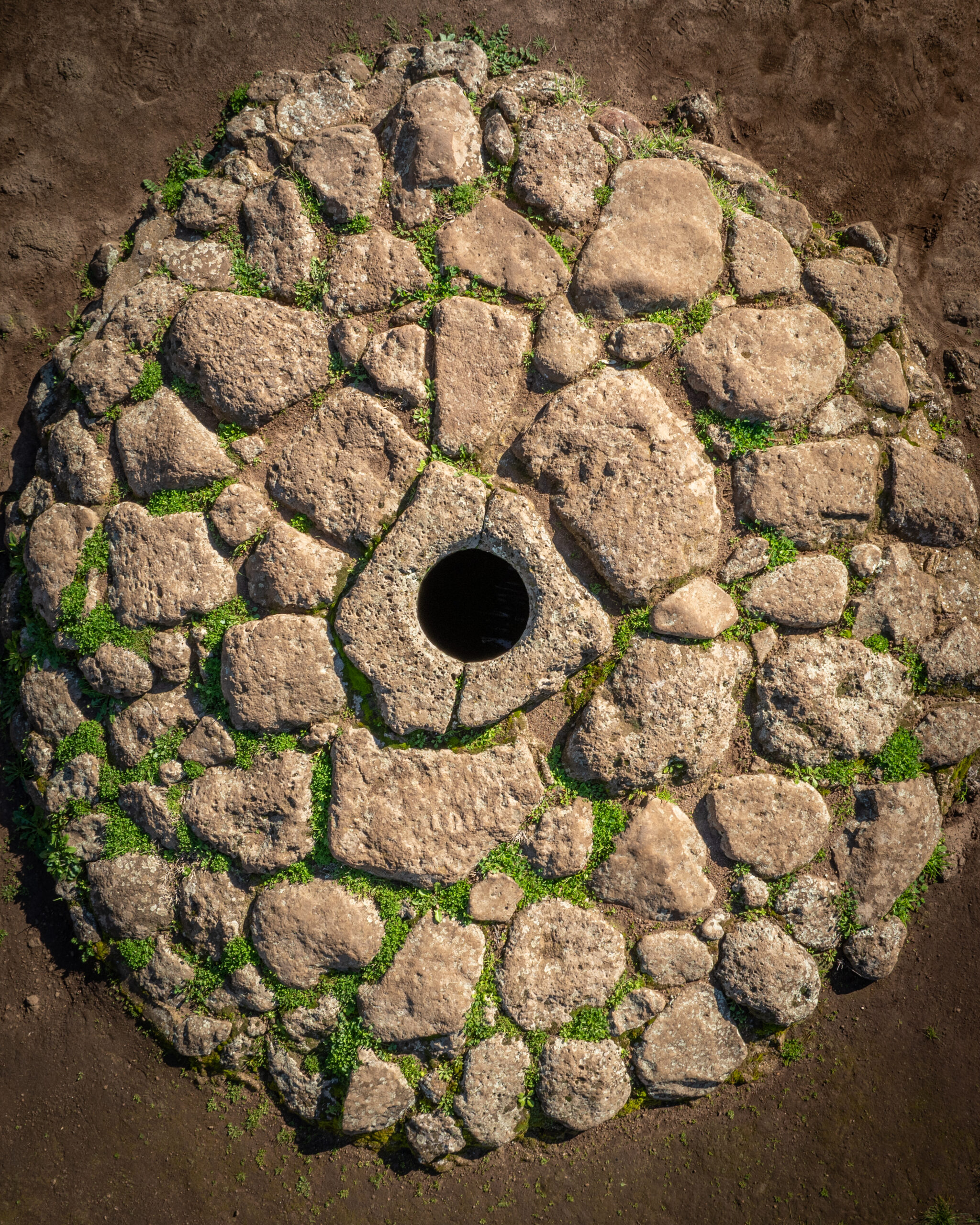
- It travels down the interior wall of the tholos, passing through the circular opening (about 30 cm in diameter) above the chamber.
- The sacred water becomes a mirror of the Moon, amplifying the mystical and symbolic power of the site.
This event occurs only during the major lunar standstill—once every 18.6 years—making it exceptionally rare and precious.
Architecture as an Astronomical Instrument
The orientation of the well to capture not only solar rays during the equinox, but also lunar light during the standstill, reveals the sophisticated astronomical knowledge of the Nuragic civilization in Sardinia.
The circular underground chamber, with its upward opening, functions as a natural observatory—transforming into a “celestial mirror.” Water itself, a sacred and life-giving element, becomes the medium through which the sky is reflected onto the earth.
In this way, the well was not merely an engineering work for collecting water, but a cosmic temple connecting humanity to the cycles of nature and the heavens.
According to leading scholar Arnold Lebeuf, the temple-well of Santa Cristina was very likely used to predict eclipses, further emphasizing its astronomical function.
Ritual and Religious Significance
Scholars hypothesize that the lunar standstill played a central role in Nuragic ritual practices:
- The full Moon reflected in the water may have been interpreted as a divine manifestation.
- The rarity and cyclic nature of the event likely made it the occasion for collective ceremonies involving federated communities.
- The 18.6-year cycle may have marked important agricultural, pastoral, and political milestones.
It is possible that during the standstill, leaders and communities gathered to celebrate harmony between humanity and nature, strengthening alliances and formalizing political agreements.
A Rare Phenomenon in the Mediterranean
The lunar standstill phenomenon observable at Santa Cristina has few parallels in the Mediterranean world. While other ancient cultures—such as the Egyptians or Mesopotamians—created solar and lunar alignments, in Sardinia the integration of astronomy, architecture, and water reaches a unique level of refinement.
This makes the site of Paulilatino not only one of the most important places of Nuragic Sardinia, but also a jewel of global archaeoastronomy.
The Setting of Paulilatino: Water, Olive Trees and Tradition
The Sacred Well stands just a few kilometers from Paulilatino, a village known for its long agricultural tradition and olive oil culture. The centuries-old olive trees surrounding the sanctuary reinforce the connection between land and sacredness, reminding us how water and oil have always represented two essential pillars of local life.
The lunar standstill, uniting sky and water, unfolds within a landscape that has valued its natural resources for centuries, creating an ideal bridge between past and present.
Dates of the Next Lunar Standstill
The major lunar cycle repeats every 18.6 years. The last major standstill occurred in 2006, the next was reached in 2024, and the following will be visible around 2043.
Those fortunate enough to be in Paulilatino during that time may witness a phenomenon that has fascinated humanity for millennia—an event that continues to attract scholars, enthusiasts, and travelers from around the world.
A Timeless Cosmic Rite
The lunar standstill at the Sacred Well of Santa Cristina is far more than an astronomical occurrence: it is a cosmic rite that unites architecture, spirituality, and landscape. It testifies to the wisdom of the Nuragic people and their profound relationship with sky and earth.
To visit the site during this rare alignment is to witness a spectacle rooted in deep antiquity: the Moon, through a play of light and reflection, mirrored in sacred water—reminding us that Sardinia is not only a land of nuraghi, but also a land of stars, cosmic cycles, and mysteries still waiting to be unveiled.