A Masterpiece of Nuragic Architecture
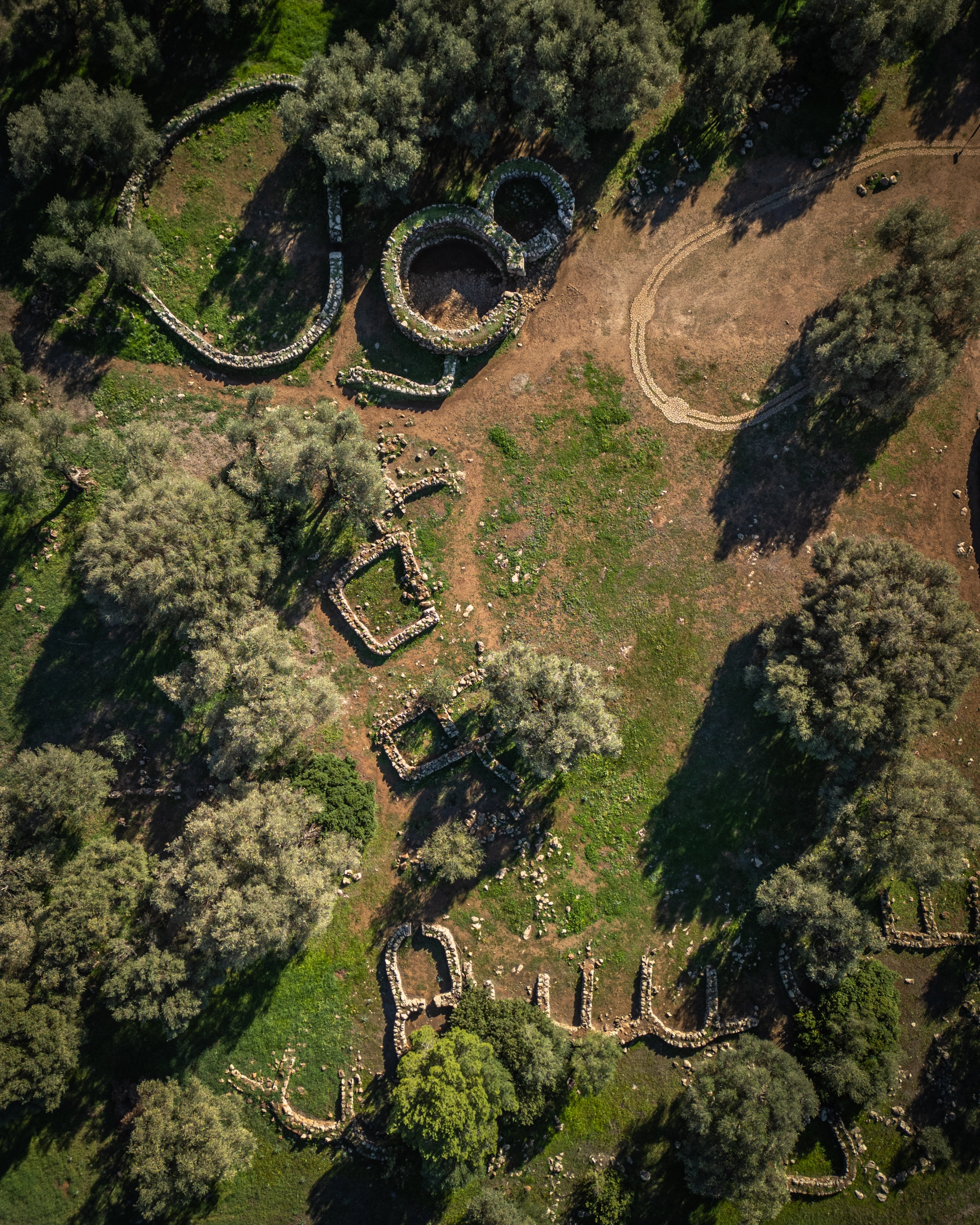
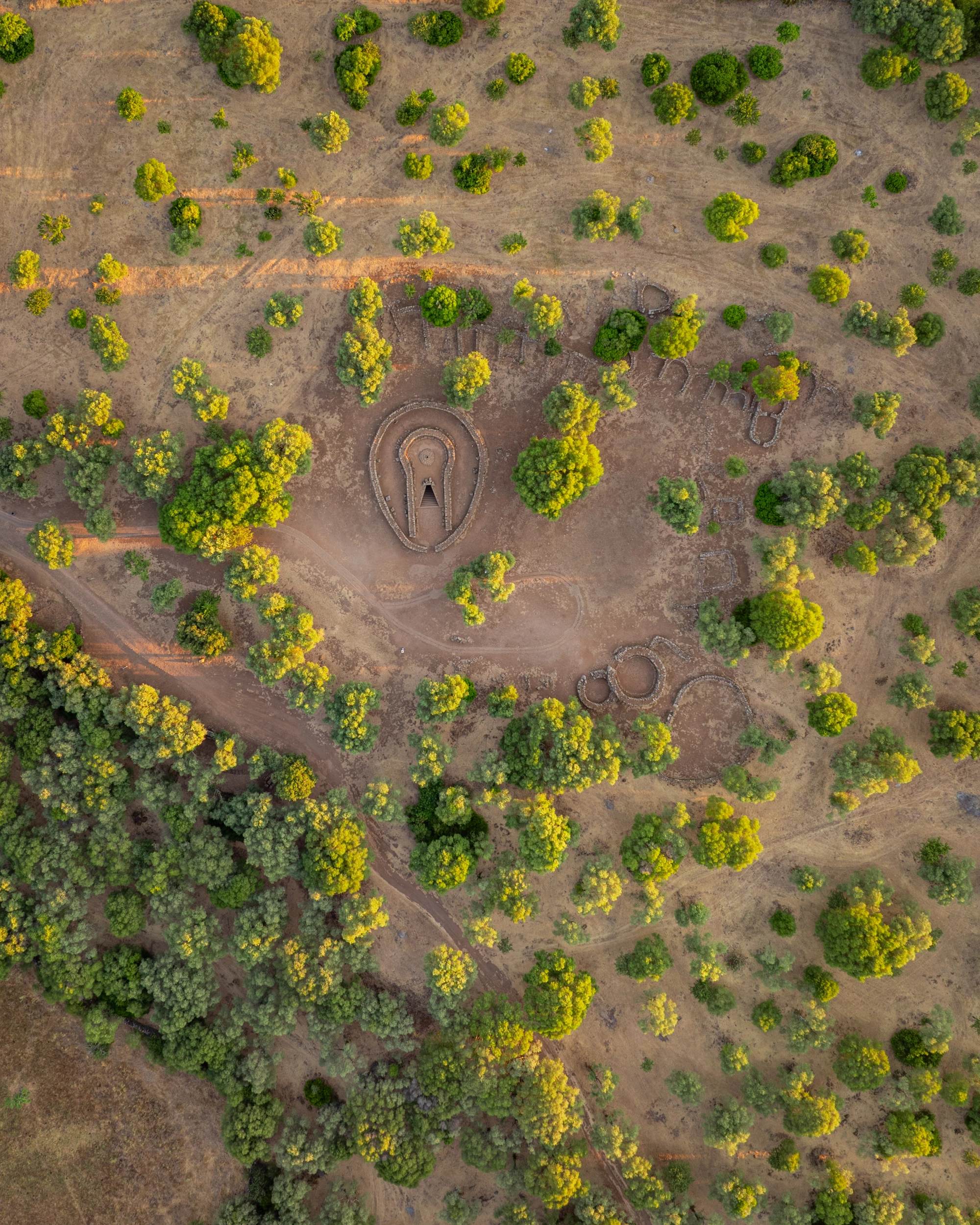
The Sacred Well of Santa Cristina Archaeological Site, located in the territory of Paulilatino, is universally regarded as one of the greatest examples of Nuragic architecture. Its geometric perfection, attention to detail, and harmony of form have long impressed archaeologists, architects, and visitors alike. Standing before it, one is struck by how extraordinarily modern it appears—despite having been built more than three thousand years ago.
What makes this monument unique is not only its religious and symbolic function, linked to the cult of water, but also the construction techniques and materials employed. These reveal an advanced understanding of structural principles, the physical properties of stone, and geometry.
Nuragic Construction Technology
To understand the innovative scope of the well, it is necessary to consider the broader context of Nuragic building technology. The Nuragic civilization, which developed in Sardinia between the Middle Bronze Age and the Iron Age (18th–6th century BC), is known for its dry-stone constructions, particularly the nuraghi.
Traditional masonry was cyclopean: enormous, roughly shaped stone blocks were stacked without mortar. The fundamental structural principle was to keep each block “in force,” perfectly positioned within a system that transferred weight downward while balancing thrusts and counter-thrusts.
The Sacred Well, however, introduces a true construction paradigm shift. Here, the blocks are not merely fitted together: they are perfectly squared, smoothed, and laid with millimetric precision, using friction as the binding force. This type of masonry, known as isodomic, was rare in Nuragic architecture and resembles techniques that would become widespread only centuries later in Phoenician and Greek contexts.
Materials: The Volcanic Stone of the Guilcier
The materials used for the well come from the surrounding territory, particularly the volcanic basalt typical of the Guilcier plateau. Basalt is an extremely hard stone, resistant to compression and the passage of time, yet difficult to work.
The choice of basalt was deliberate:
- It ensures durability, as demonstrated by the structure’s remarkable preservation over three millennia.
- It allows precise cutting, essential for achieving perfectly fitting ashlar blocks.
- It creates a chromatic contrast with the surrounding landscape, giving the monument an austere and monumental appearance.
Working these blocks required considerable technical skill. The stones were quarried, transported, and refined using bronze and stone tools until smooth surfaces and regular edges were achieved.
Innovative Construction Techniques
The Sacred Well of Santa Cristina displays several construction solutions that distinguish it from most contemporary works.
1. Isodomic Masonry
The stone blocks are arranged in perfectly regular horizontal courses. This isodomic masonry does not use mortar; cohesion is ensured by friction and the precision of the joints.
From a technological standpoint, the well’s masonry belongs to the same structural principle (techneme) as mortar-built masonry: in both cases, stability derives from resistance to sliding between blocks. For this reason, some scholars hypothesize that the technique may have been influenced by contacts with more advanced Mediterranean cultures, such as the Phoenicians.
2. T-Shaped Blocks
A distinctive feature is the presence of T-shaped blocks within the structure. Structurally, this shape offers no particular advantage and may even increase horizontal thrust. This suggests that the choice was primarily symbolic, possibly connected to solar or religious motifs.
In other Nuragic sacred wells, blocks with mammilliform protrusions appear—absent at Santa Cristina. Here too, the function seems more symbolic than structural.
3. The Tholos Vault
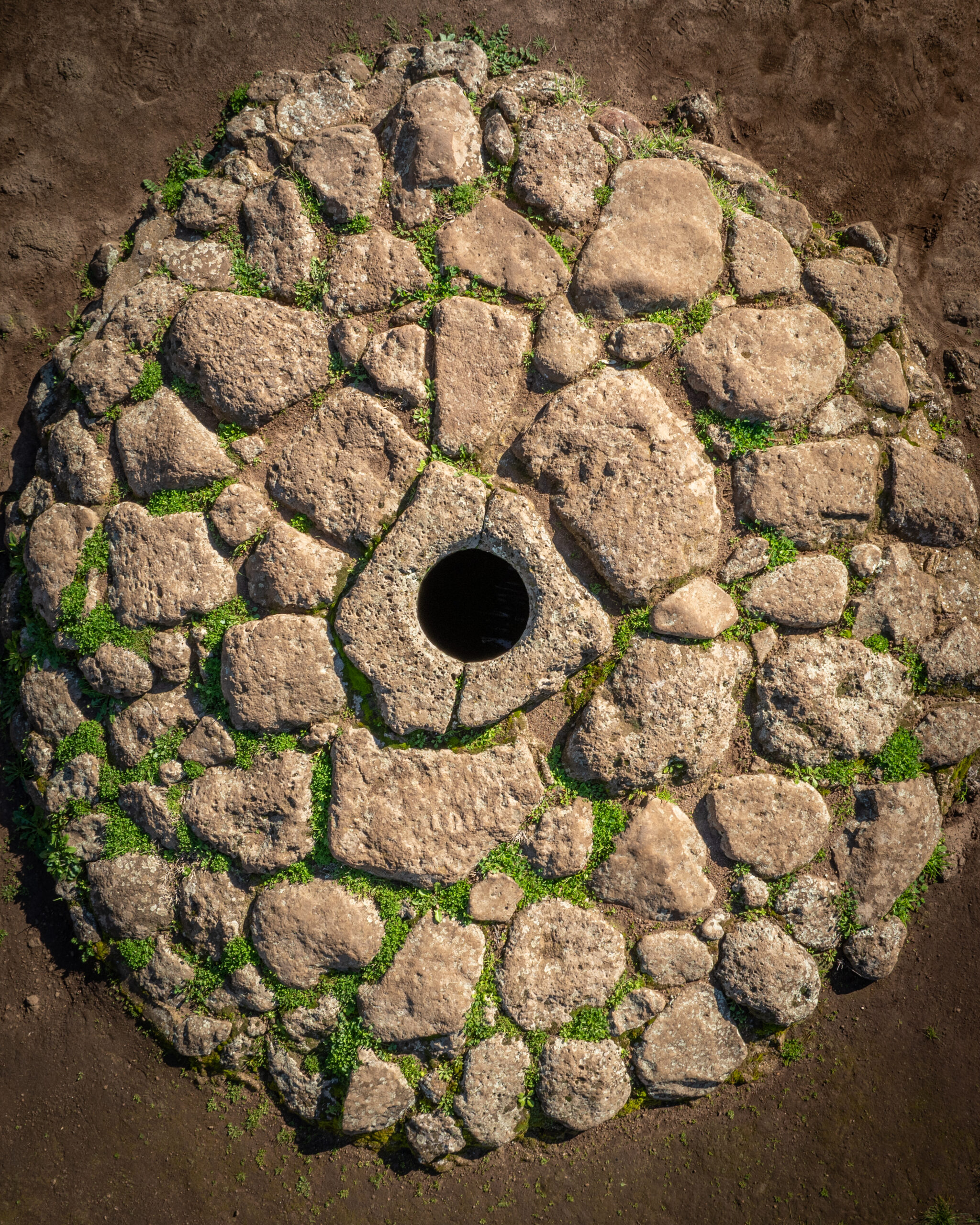
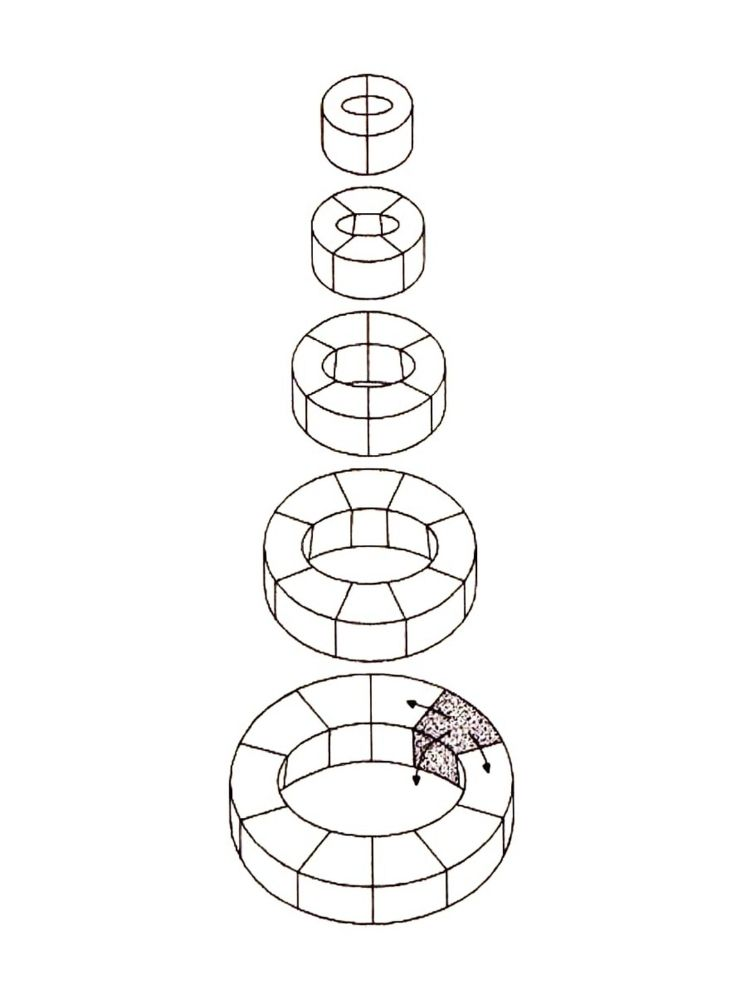
The well shaft is covered by a false-dome (tholos) vault, constructed with concentric rings of stones that gradually project inward. More than a simple corbelled vault, it can be understood as a horizontal arch in compression: the blocks, pressed downward by their own weight, lock laterally into a stable and continuous structure.
This technique recalls that used in nuraghi, yet at Santa Cristina it achieves extraordinary geometric refinement.
4. Projecting Courses
Another original feature is the slight projection of the masonry courses: the blocks extend subtly outward from the wall surface, creating horizontal markings that highlight each construction level. This visual effect does not appear to serve a structural function, but rather a symbolic or aesthetic one—perhaps emphasizing the cyclical nature of the building process, repeated course after course.
Geometric Precision and Symbolic Meaning
One of the most astonishing aspects of the Sacred Well is its geometric precision. The staircase, composed of 25 steps, leads to a perfectly symmetrical underground chamber. The proportions between height, width, and depth follow regular ratios, leading some scholars to suggest connections with astronomical observations.
This constructional perfection is not merely a display of technical skill, but evidence of a cultural vision that united architecture, religion, and astronomy. Every block, every joint, every line appears to carry not only practical, but also ritual and symbolic meaning.
Comparison with Other Examples
The Sacred Well of Santa Cristina is not an isolated case: Sardinia preserves other sacred wells and Nuragic springs, such as Su Tempiesu. However, the level of perfection achieved at Paulilatino remains unparalleled.
The combination of isodomic masonry, T-shaped blocks, tholos vault, and projecting courses is not found elsewhere with the same degree of refinement. For this reason, the site is considered one of the highest expressions of Nuragic architecture.
The Well as a Technical and Symbolic Manifesto
The Sacred Well of Santa Cristina is not merely a place of water worship, but also a manifesto of Nuragic construction capabilities. The chosen materials, adopted techniques, and innovative solutions demonstrate a surprising knowledge of physical and structural laws.
At the same time, many details defy purely functional explanation, pointing instead to a symbolic and ritual dimension. The shape of the blocks, the regularity of the courses, and the geometric precision all seem to allude to a cyclical conception of time and a profound connection with the cosmos.
Visiting the well therefore means not only admiring an extraordinary architectural work, but also encountering a culture capable of blending technique, religion, and symbolism into a single, timeless monument.