A Journey into the Heart of Sardinia
In Sardinia there are places that tell the island’s millennia-old history through stones, rituals, and landscapes. Among the most evocative is the archaeological site of Santa Cristina Archaeological Site, located in the territory of Paulilatino, in the province of Oristano.
Here, visitors can embark on a true journey through time, where the spirituality of the Nuragic civilization intertwines with the testimonies of medieval Christian faith. All of this is set within a natural landscape marked by centuries-old olive trees—an identity symbol of the area and silent witnesses to centuries of history.
Visiting Santa Cristina means following a path that is not only archaeological, but also emotional: from the fascination of the Nuragic sacred well to the austere silence of the nuraghe and the boat-shaped huts, and finally to the communal dimension of the Romanesque church and the muristenes (pilgrims’ lodgings). Every space has meaning; every stone tells a story linked to those who lived and prayed here over the centuries.
The Sacred Well
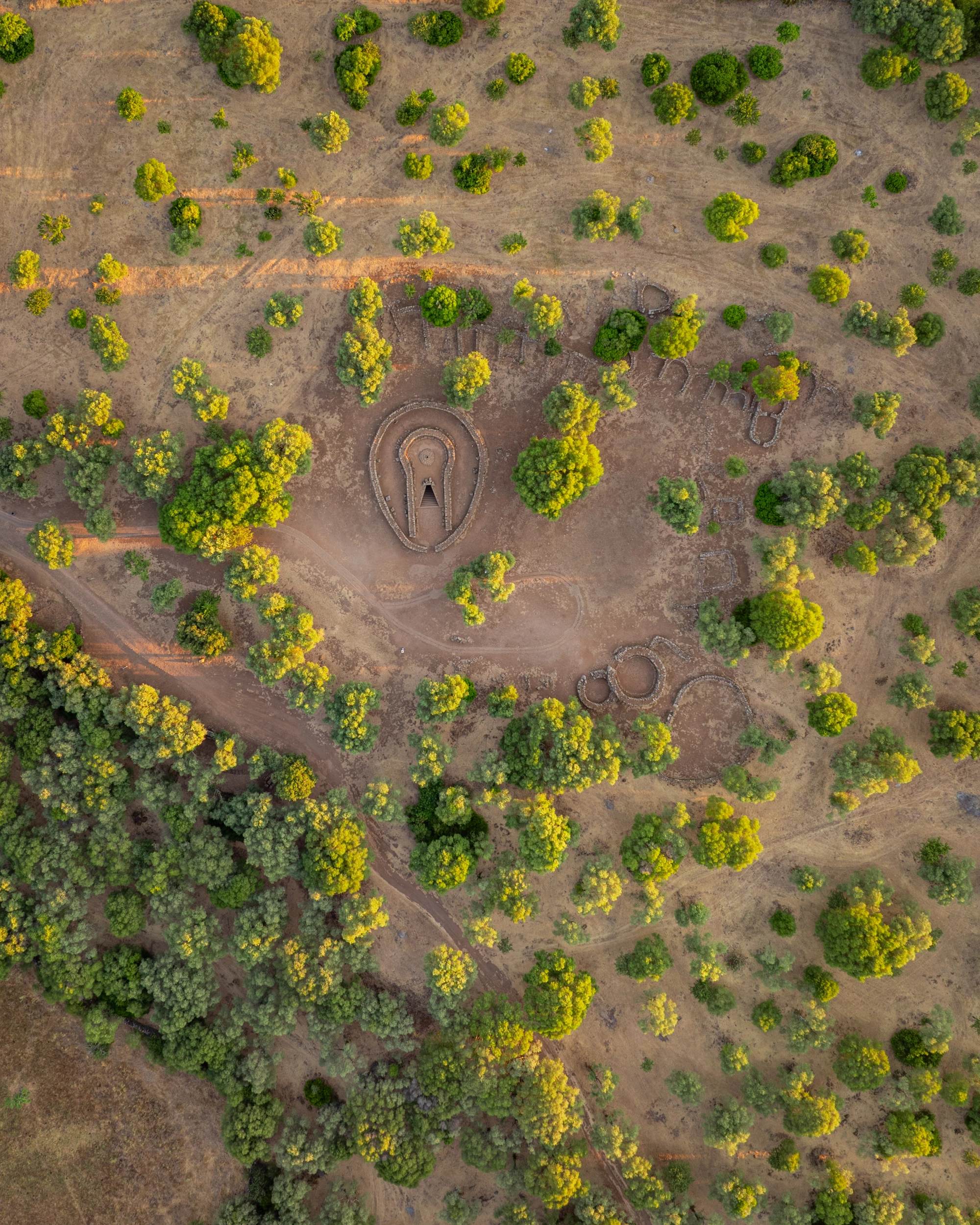
The heart of the site is the Sacred Well, an architectural masterpiece of the Nuragic civilization. Dating back to the Late Bronze Age (12th–9th century BC), it is one of the best-preserved structures in all of Sardinia and the largest of its kind.
The structure consists of three main parts:
- the vestibule, a wide open space that functioned as an entrance and gathering area;
- the staircase, made up of 28 perfectly squared steps descending underground;
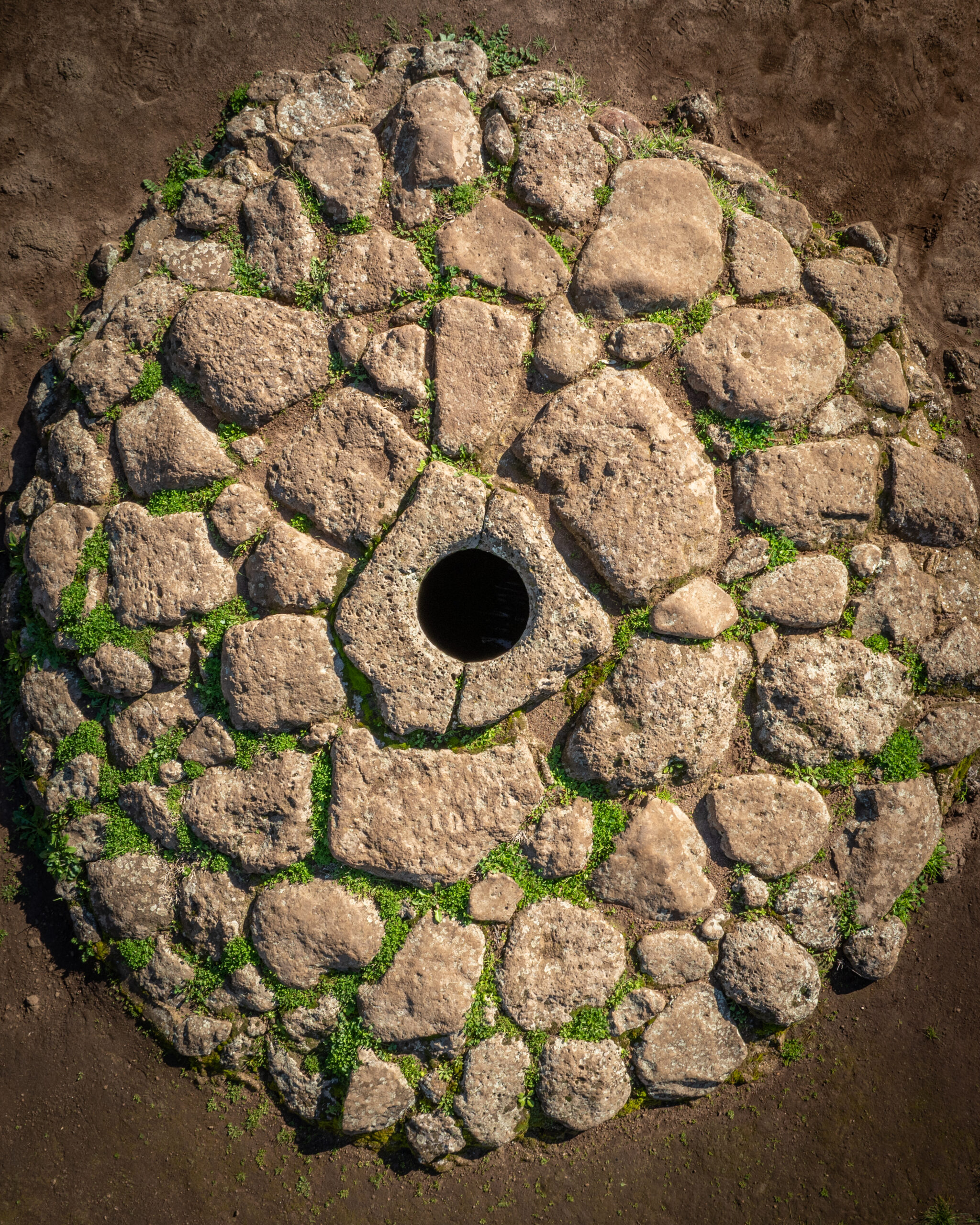
- the hypogean chamber with a tholos (false-dome) vault, where the spring water flows.
The well was a sacred place used for rituals and ceremonies connected to water—an element considered divine because it symbolized life, purification, and fertility. It was not simply a reservoir, but a true underground sanctuary, where contact with the spring held religious and symbolic meaning.
The elegance of the construction and the precision of the stonework testify to the engineering refinement of the Nuragic people, capable of creating spaces that still convey harmony and awe today.
The Nuragic Village and the Nuraghe
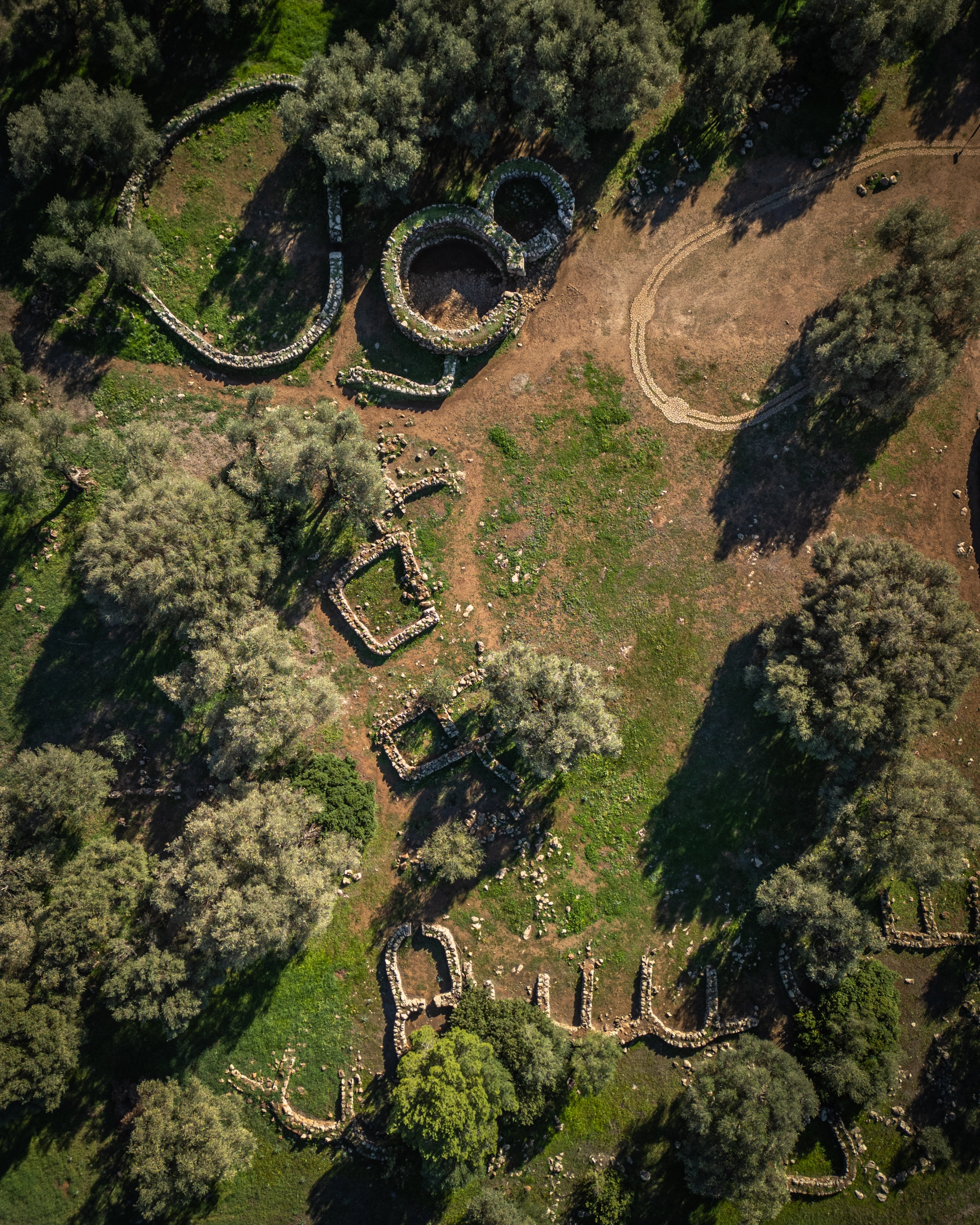
Around the well stood the Nuragic village, of which traces of circular huts and numerous rectangular structures remain today. Their foundations allow visitors to imagine a vibrant settlement, frequented by families, pilgrims, and communities gathering during moments of worship.
Among the most significant buildings is the meeting hut, recognizable by the stone bench running along its walls. This structure was likely a political and religious assembly place, where leaders and priests made collective decisions, strengthening the bond between faith and social organization.
Within the site stands a single-tower nuraghe, a typical construction of the Nuragic civilization. This nuraghe had both strategic and symbolic functions: it served as a control and defensive point, but also as a sign of the complex’s central importance. Its presence reinforces the idea that Santa Cristina was not only a sanctuary, but also a territorial and communal hub.
The Church and the Muristenes
Centuries later, with the arrival of Christianity, the area retained its religious vocation. In the 12th century, the Romanesque Church of Santa Cristina was built—a small yet evocative structure made of dark volcanic stone. Dedicated to the martyr of Bolsena, the church gave the site its name and became a reference point for the local Christian community.
Around the church developed the muristenes, a complex of rectangular stone houses used as temporary lodgings for pilgrims and worshippers during religious festivals.
Even today, the muristenes come back to life twice a year during the celebrations dedicated to Saint Christina, generally in spring and autumn. During these festivities, the area fills with religious rites, songs, communal banquets, and shared moments that transform the site into a vibrant village—just as it was in Nuragic times.
The Landscape of Olive Trees
Walking through the different areas of the site, visitors are accompanied by centuries-old olive trees. These majestic trees not only frame the landscape but also represent a profound symbol of the region’s agricultural culture.
Paulilatino and the Guilcier area are known for producing high-quality extra virgin olive oil, the result of a tradition passed down for centuries. Thus, while the sacred well tells the story of the cult of water, the olive trees evoke another vital and sacred element—oil—used as food, medicine, and ritual component throughout different eras.
The natural landscape becomes an integral part of the itinerary: the trees seem to guard the memories of the past, giving the site an aura of continuity between everyday life and the sacred dimension.
Curiosities and Details
During a visit to Santa Cristina, several aspects enrich the experience:
- The muristenes are still in use today, keeping alive a centuries-old communal tradition. If you visit during religious festivities, you may find local families spending their days in their small stone houses.
- The Romanesque church, though simple in form, preserves its spiritual atmosphere and is still used for religious celebrations.
- The Santa Cristina complex is one of the rare examples where continuous stratification of uses and beliefs can be observed: from the Nuragic water cult to medieval Christianity, and up to contemporary popular devotion.
An Itinerary of Faith, History, and Nature
The itinerary at the archaeological site of Santa Cristina is a journey across millennia and cultures. From the sacred well to the Nuragic village, from the nuraghe to the medieval church, and finally to the muristenes and olive trees that frame the landscape, every element contributes to making this place unique.
It is not only about admiring ancient monuments, but about living an experience that weaves together history, spirituality, and tradition. Santa Cristina continues to be a center of faith and community—just as it was three thousand years ago.
By visiting it, one clearly perceives that Sardinia is not only an island of sea and beaches, but also a land deeply connected to its memory, capable of offering cultural itineraries of extraordinary value.