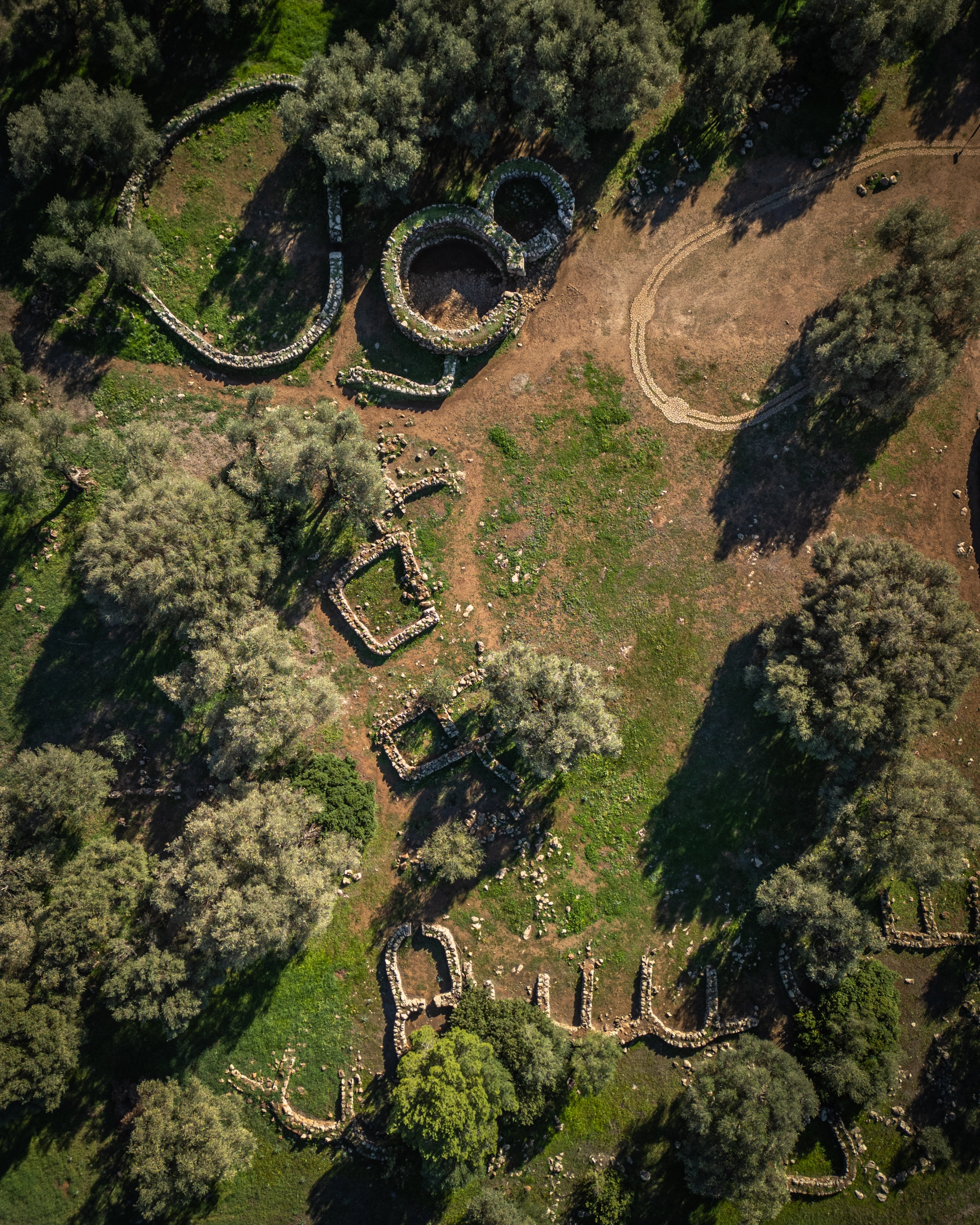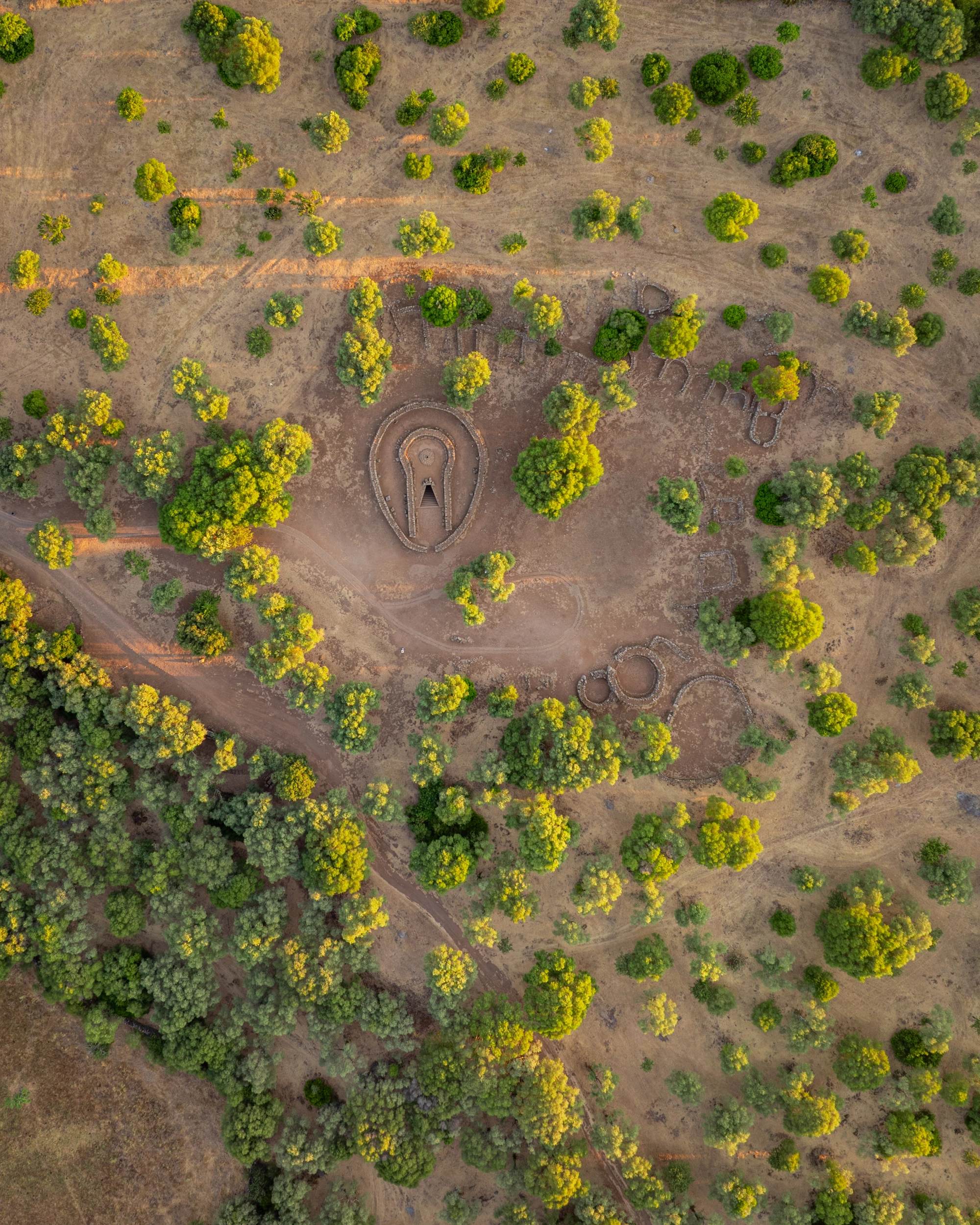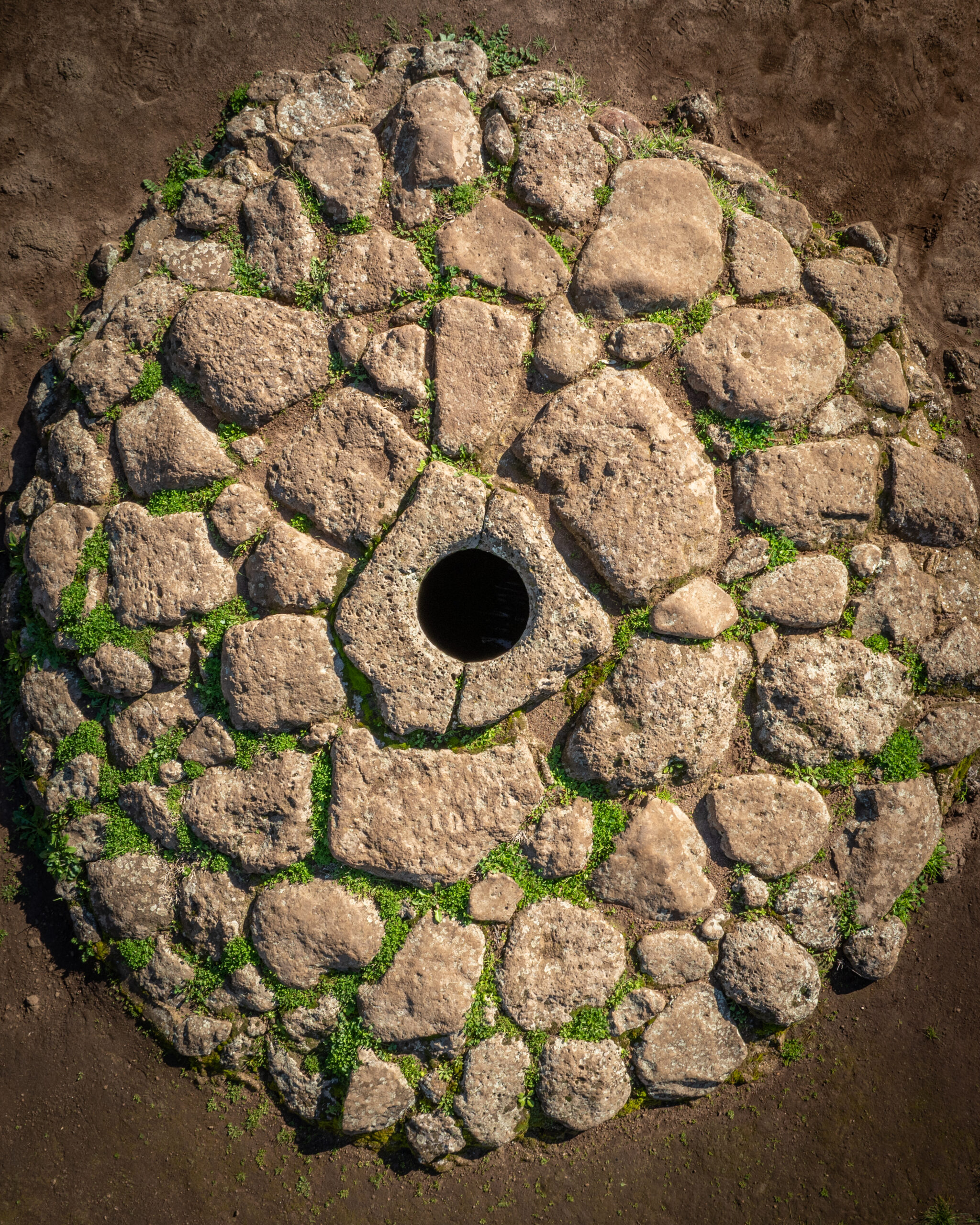
The archaeological area of the Sacred Well of Santa Cristina Archaeological Site, in the municipality of Paulilatino, is one of the most extraordinary sites of Nuragic Sardinia. Known for its impressive sacred well—built with carefully squared basalt blocks and a hypogean staircase descending toward spring water—the site is today surrounded by centuries-old olive trees that enhance its beauty and symbolic value.
The introduction of olive cultivation in Sardinia is generally attributed to Phoenician populations between the 8th and 7th centuries BC. These trees are not mere landscape elements: they represent a living testimony to the intertwining of nature and culture over time and form a direct link with the olive oil tradition that defines Paulilatino and the wider Montiferru area. Here, olive growing is not simply an agricultural activity, but an integral part of the community’s historical, economic, and cultural identity.
Paulilatino and the Culture of Olive Oil
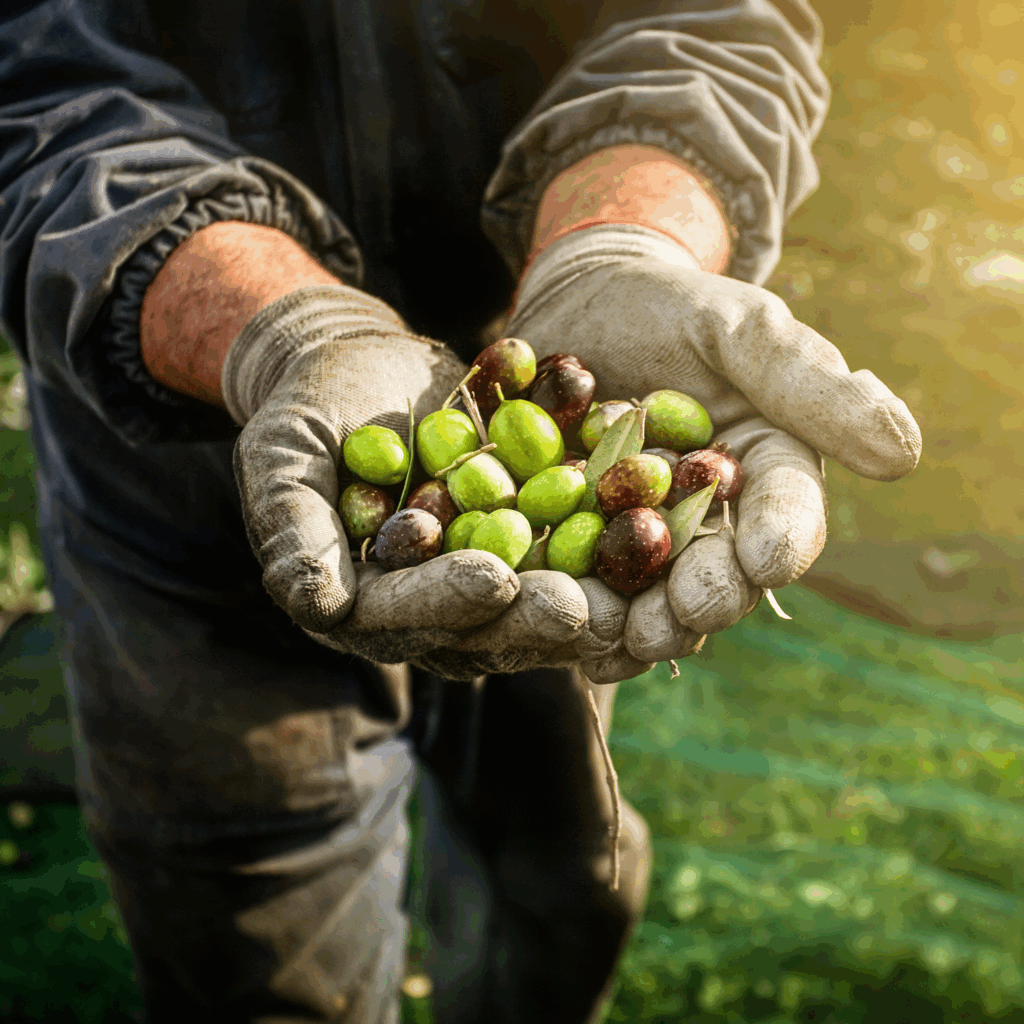
The village of Paulilatino, with its olive groves stretching across hills and valleys, is renowned for producing high-quality extra virgin olive oil, obtained from local cultivars such as Bosana and Semidana. Olive harvesting is still largely carried out by hand, following traditional methods that respect the rhythms of nature and preserve the fruit’s organoleptic qualities.
Olive oil is not just food: it symbolizes fertility, health, and prosperity—concepts that resonate deeply with the sacred role of water in Nuragic times. The presence of olive trees around the Sacred Well thus creates a double thread connecting past and present, ancient rituality and contemporary agricultural tradition.
Olive Trees as Guardians of History
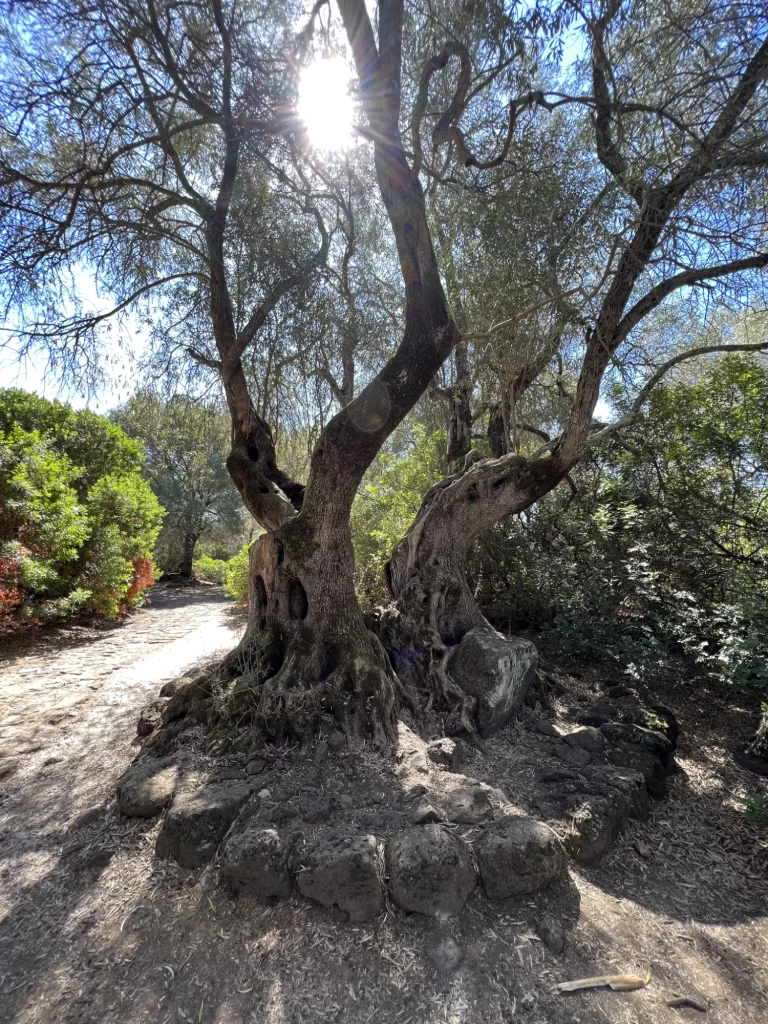
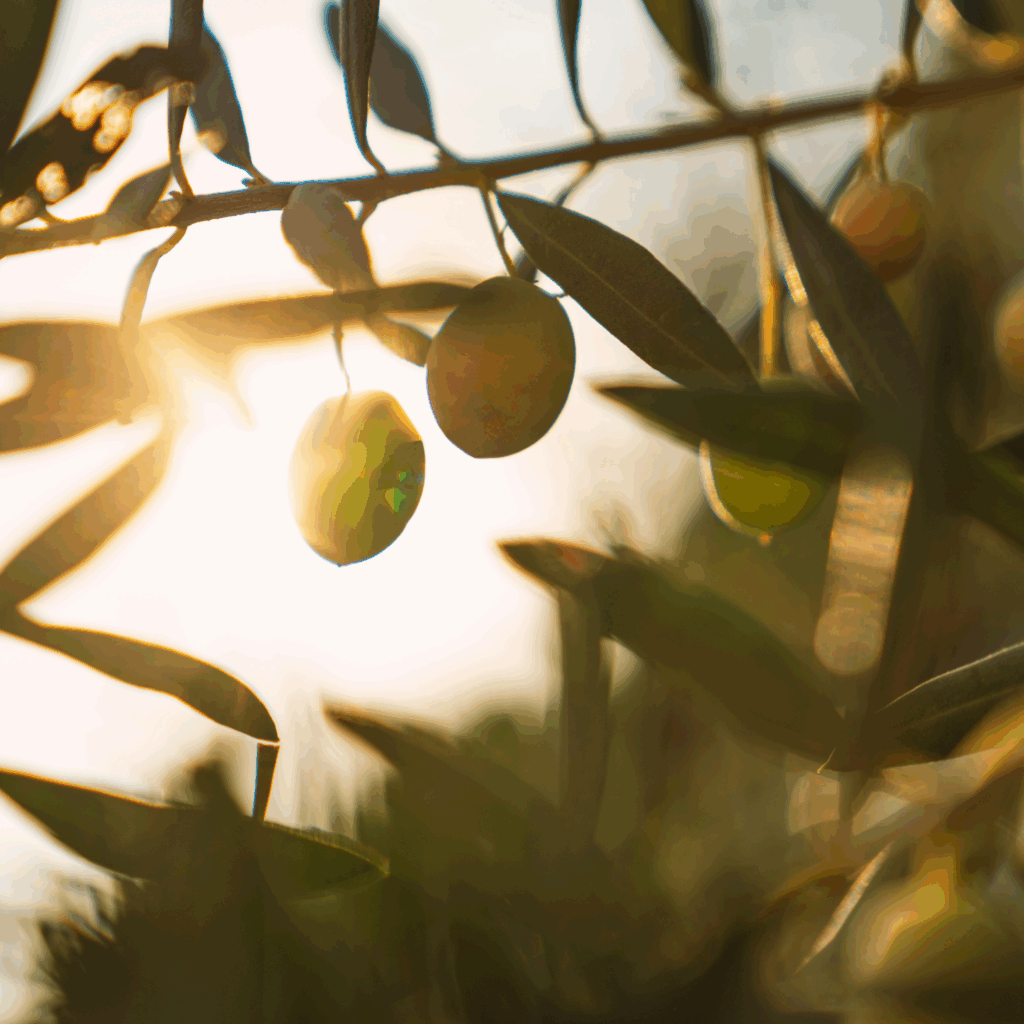
The olive trees surrounding the Sacred Well are often centuries old, with twisted trunks and wide canopies that seem to silently guard stories spanning thousands of years. Their placement is not accidental: they shape the sanctuary’s landscape, define its spaces, and contribute to an atmosphere of natural sacredness.
These trees symbolize longevity, resilience, and connection to the earth—values that were fundamental to Nuragic communities. Like the water of the well, the olive tree represents life and continuity, symbolically protecting the site and offering visitors a sense of peace and harmony.
The Sacredness of Water and the Natural Setting
The Sacred Well of Santa Cristina is celebrated for its monumental staircase leading to the spring water, a central element of Nuragic religious life. According to archaeologists such as Giovanni Lilliu and Antonio Taramelli, water held not only practical value but sacred significance, connected to purification, healing, and divine judgment.
Within this context, olive trees become part of the ritual landscape. Their presence enhances the perception of sacredness and establishes a dialogue between nature and architecture. The contrast between the solidity of the well’s basalt stones and the vitality of the trees creates a unique environment where past and present meet.
Olive Symbolism in Mediterranean Culture
The olive tree is one of the most symbolic plants of the Mediterranean world. In many ancient cultures, it represented peace, regeneration, and wisdom. It is plausible that the Nuragic people attributed to the olive tree a ritual significance similar to that of water: a source of life and an object of reverence.
The combination of olive trees and water at the Sacred Well of Santa Cristina suggests an integrated vision of the sacred, where natural and architectural elements together create a complete religious and cultural experience. With their deep roots and twisted trunks, the olive trees stand as silent guardians of the site’s historical memory.
Olive Trees and the Local Economy
Beyond their symbolic and landscape value, olive trees represent an important economic resource for Paulilatino. The production of extra virgin olive oil has ancient roots: historical records and local traditions show how, over the centuries, the olive fruit has shaped the agricultural and cultural economy of the area.
Olive cultivation and oil production have molded the territory itself, maintaining a living connection between people and nature. Even today, walking through the olive groves of Montiferru means observing a landscape that preserves the forms, practices, and values of Sardinian tradition.
Olive Trees, Tourism and Cultural Experience
The role of olive trees in the archaeological area is not only historical or symbolic—it also enhances the site’s appeal for visitors interested in culture and nature. A visit to the Sacred Well of Santa Cristina offers the opportunity to admire not only Nuragic architecture, but also the centuries-old olive trees that tell stories of daily life, local economy, and rural wisdom.
Integrating archaeological heritage with the culture of olive oil makes the experience more meaningful. Visitors can understand the link between ancient religious traditions and modern agricultural life, enjoying an authentic and immersive journey.
A Dialogue Between Archaeology, Nature and Tradition
The olive trees of the Sacred Well of Santa Cristina demonstrate how archaeology and nature can coexist harmoniously. The area is not only a place of excavation and study; it is a living cultural landscape where history, sacredness, agriculture, and tradition converge.
Their presence, together with the proximity to Paulilatino and its olive oil culture, conveys a clear message: heritage preservation is not limited to stones and monuments, but includes the natural and cultural elements that define a territory’s identity.
The olive trees of the archaeological area are not simply trees—they are silent witnesses of history, symbols of longevity and prosperity, guardians of a unique landscape that unites archaeology, nature, and culture.
In Paulilatino, these trees intertwine with olive oil tradition, creating an inseparable bond between past and present, sacredness and everyday life. Visiting the Sacred Well means not only admiring a masterpiece of Nuragic architecture, but also experiencing the history, nature, and traditions of one of the most fascinating areas of Sardinia.