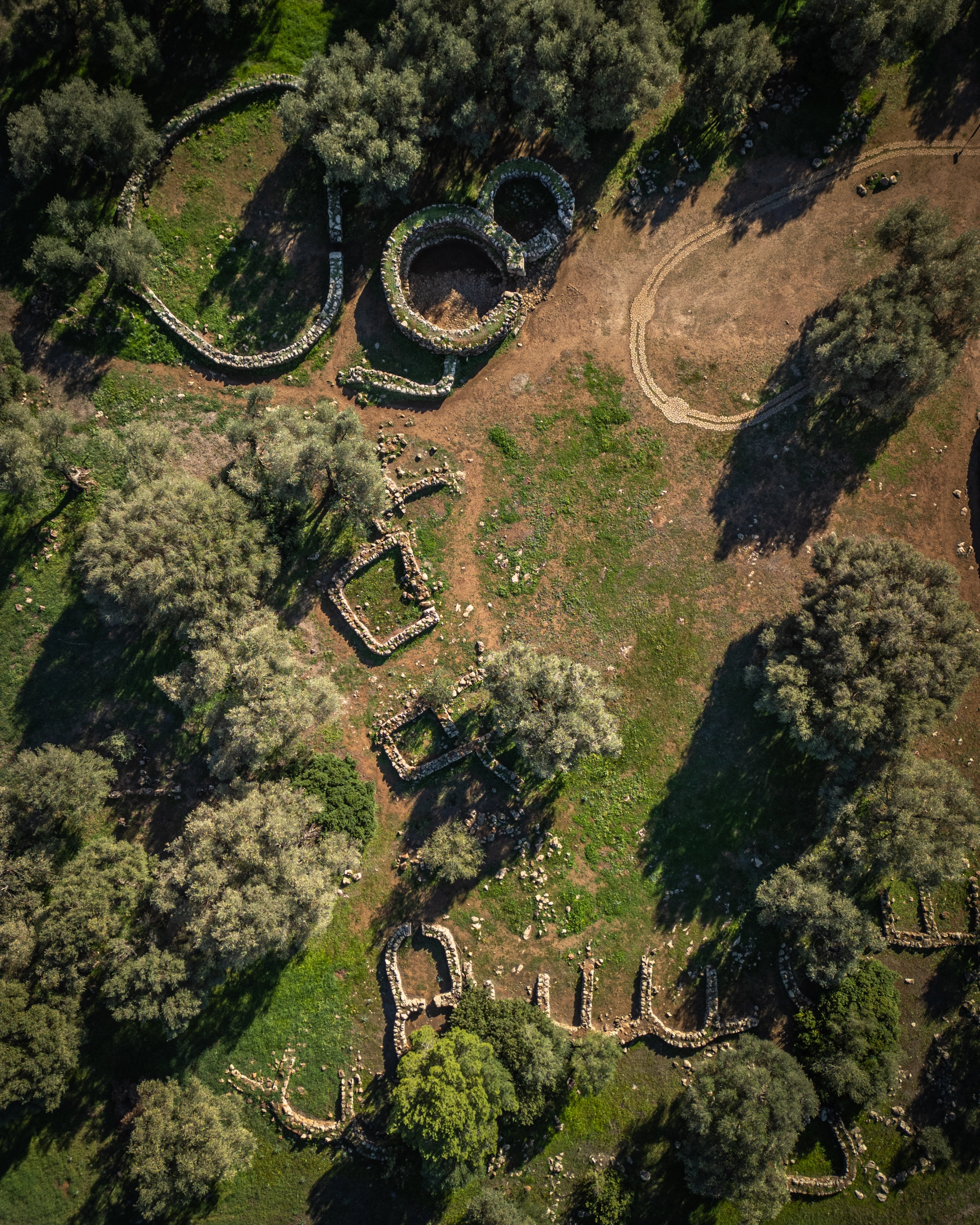
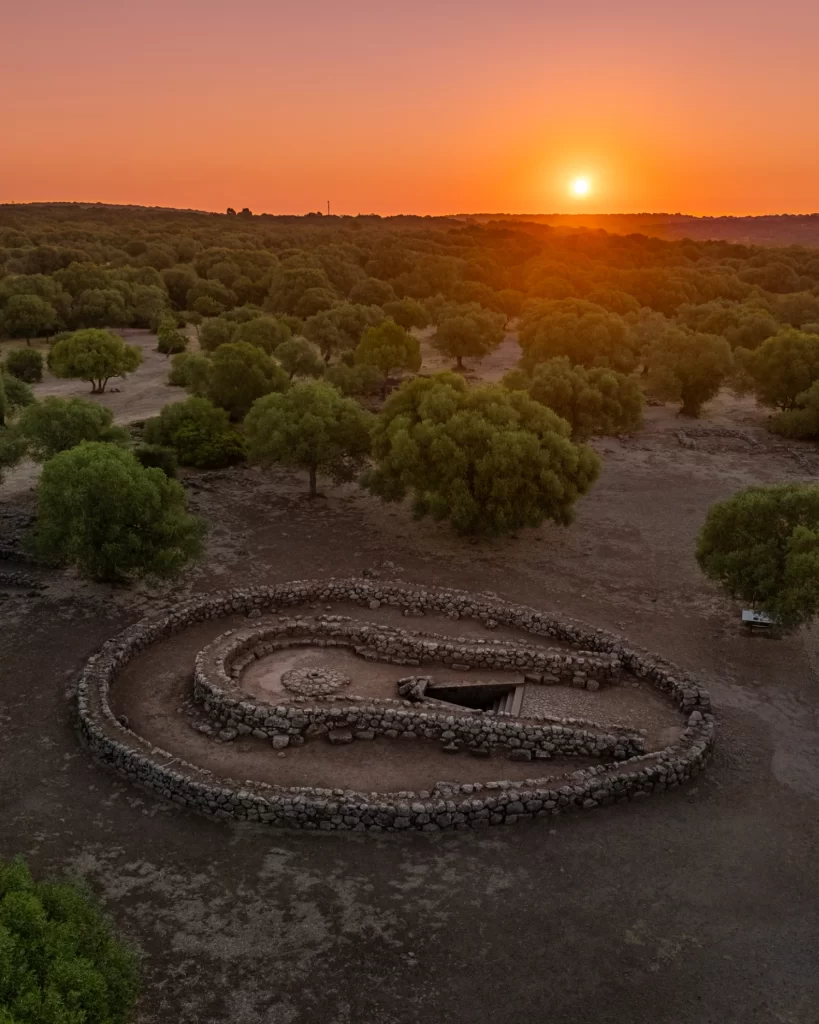
The Sacred Well of Santa Cristina Archaeological Site, located in the heart of the Montiferru area in Paulilatino, is not only one of the most important archaeological sites of Nuragic Sardinia, but also a place where astronomy, nature, and spirituality converge.
Among the most fascinating phenomena associated with the site is the equinox, a moment of the year when the rising sun aligns with the staircase and the underground chamber of the well, spectacularly illuminating the spring water at the center of the structure.
This phenomenon is not accidental. Archaeoastronomical studies suggest that the Nuragic builders designed their monuments with careful attention to solar and celestial events, integrating the cult of water with that of the sky. The equinox therefore becomes a key to understanding the spirituality and worldview of ancient Sardinian communities.
The Sacred Well: Architecture and Function
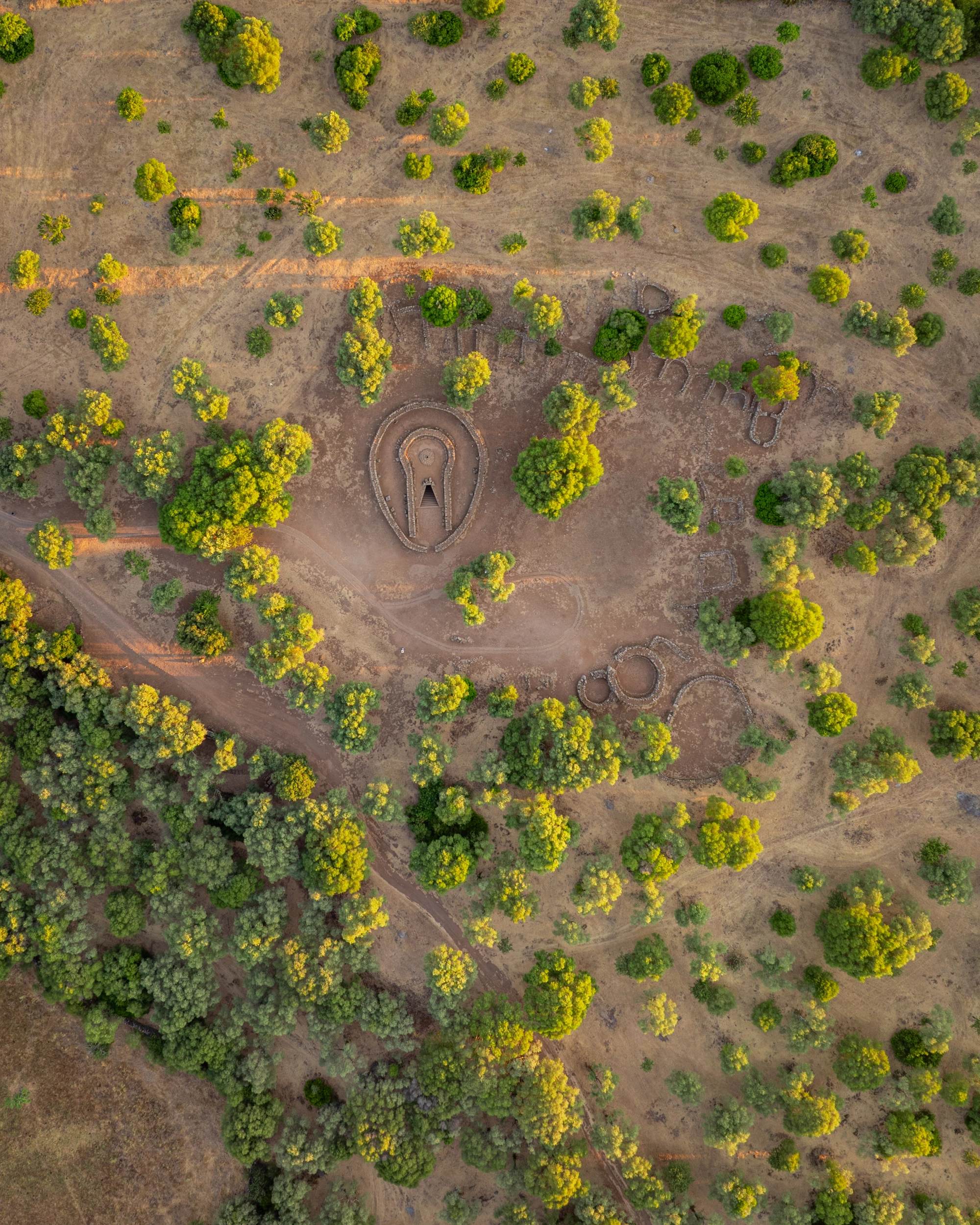
Built between the 12th and 9th century BC, the Sacred Well of Santa Cristina is a masterpiece of Nuragic architecture. Its structure consists of:
- An elliptical vestibule, probably used for ritual gatherings
- A trapezoidal staircase of 25 steps, built with carefully shaped basalt blocks, leading underground
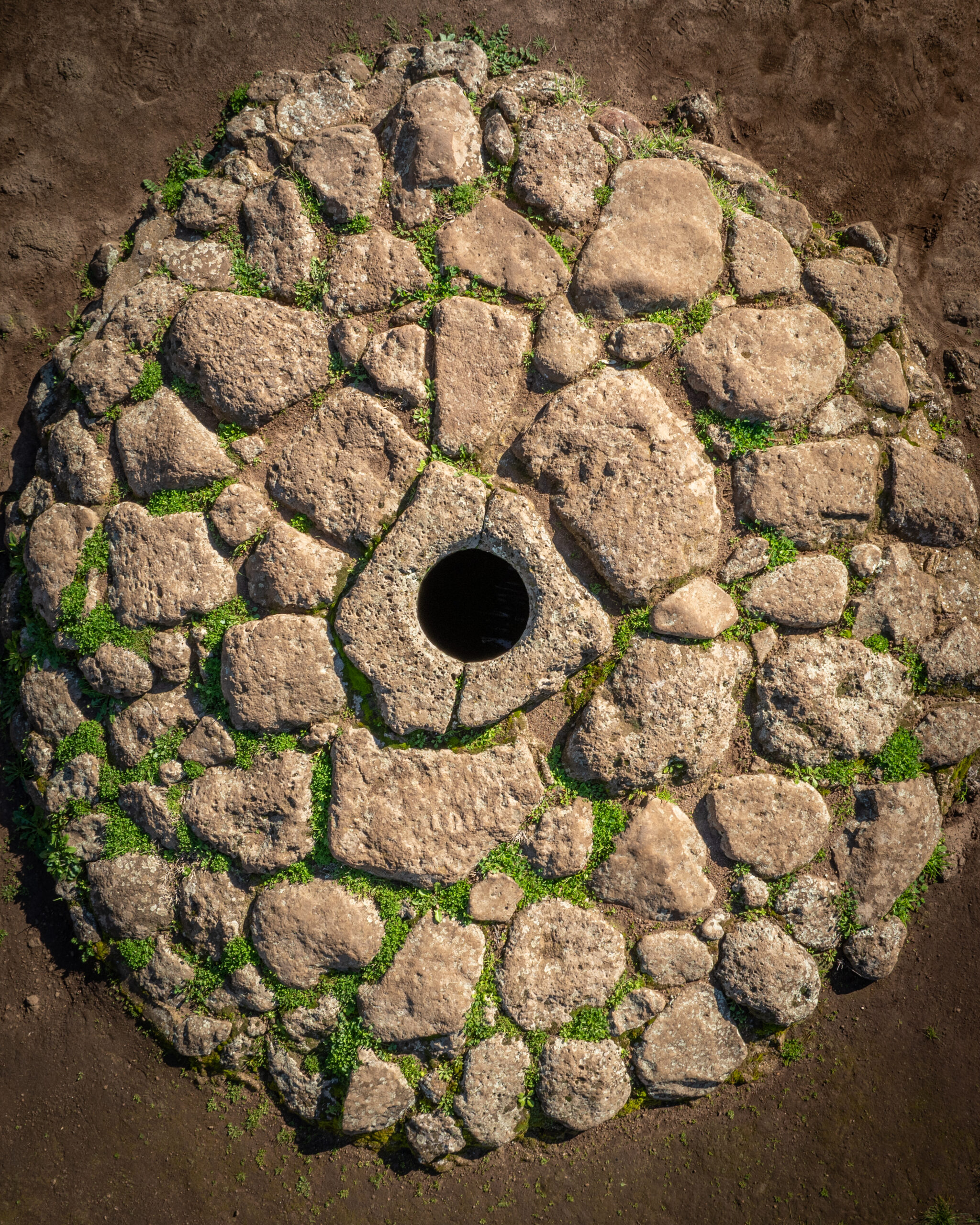
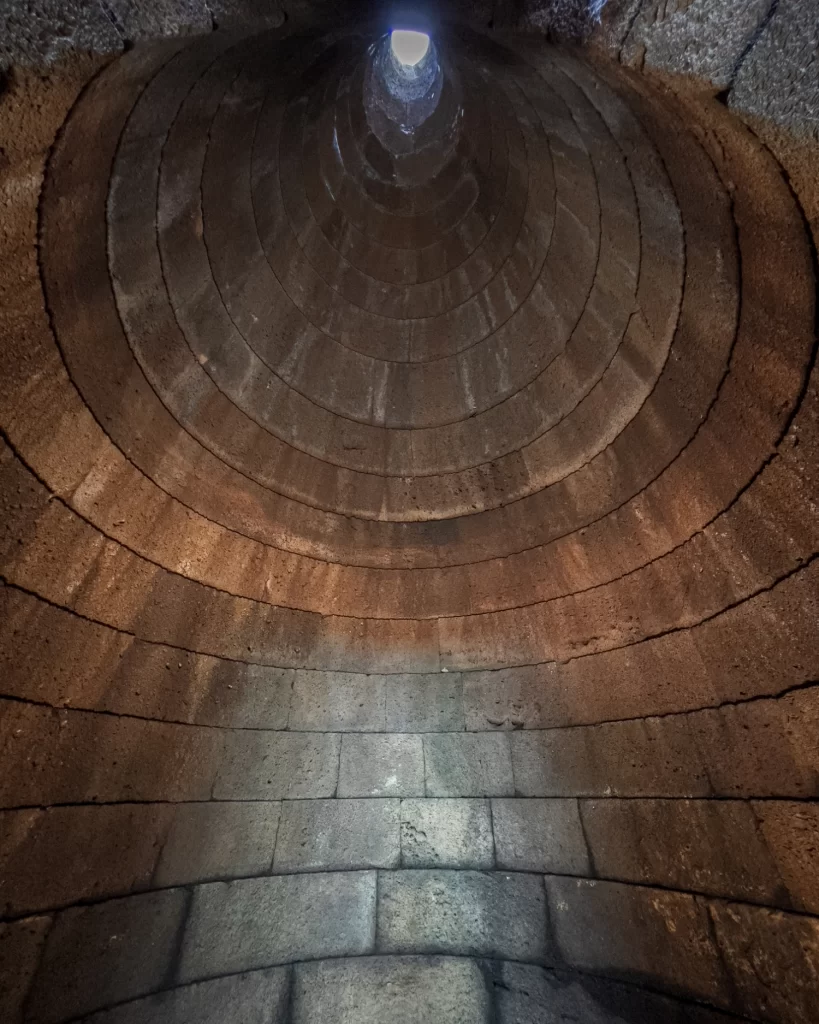
- A circular hypogean chamber, where the spring water is collected and regarded as sacred
Scholars of archaeoastronomy such as Arnold Lebeuf, Franco Laner, Mauro Zedda, Paolo Littarru, and Angelo Saba have highlighted that the staircase and chamber were not merely functional elements, but were designed with astronomical precision, capable of capturing sunlight at specific times of the year.
The Equinox Phenomenon
During the spring and autumn equinoxes—around March 18–21 and September 21–23—the sun rises along a precise alignment that directly illuminates the base of the staircase and the well chamber. The effect is extraordinary: sunlight penetrates to the water, causing the spring to shine like a small divine mirror.
This alignment suggests that Nuragic rituals may have been linked to astronomical events, connecting agricultural, religious, and social life to the cyclical rhythm of nature. The equinox, a moment of perfect balance between day and night, becomes a symbol of harmony between earth, sky, and humanity.
Astronomy and Sacred Intent
Archaeoastronomical research indicates that the Nuragic people carefully observed the sky and used solar and lunar alignments in the design of temples and wells. At Santa Cristina, sunlight during the equinox was not merely practical illumination, but a ritual instrument capable of conferring sacredness upon the water and the underground space.
The light entering the chamber likely symbolized:
- Purification: the sun’s rays sanctifying the sacred water
- Renewal: the equinox as a moment of balance and rebirth
- Cosmic connection: the bond between the community and natural, divine forces
The Cult of Water and the Equinox
The sacred well was a cult center linked to water, considered a source of life, purification, and healing. During the equinox, the sunlight illuminating the spring would have amplified the sense of sacred presence. Participants in rituals may have interpreted the alignment as a divine sign—a moment when the deity manifested through the union of sun and water.
The Technical Dynamics of the Equinox
The well is engineered to create a precise visual effect during the equinox days.
At sunrise, the first rays of light enter through the vestibule and follow the inclined angle of the staircase. Around mid-morning, the beam reaches the bottom of the well, illuminating the hypogean chamber and highlighting the water’s surface. The alignment is extremely precise: even a shift of a few centimeters in the sun’s position would significantly reduce the luminous effect inside the chamber.
The perfect alignment lasts only a few dozen minutes, making the event both rare and spectacular.
The “Inverted Shadow” Effect
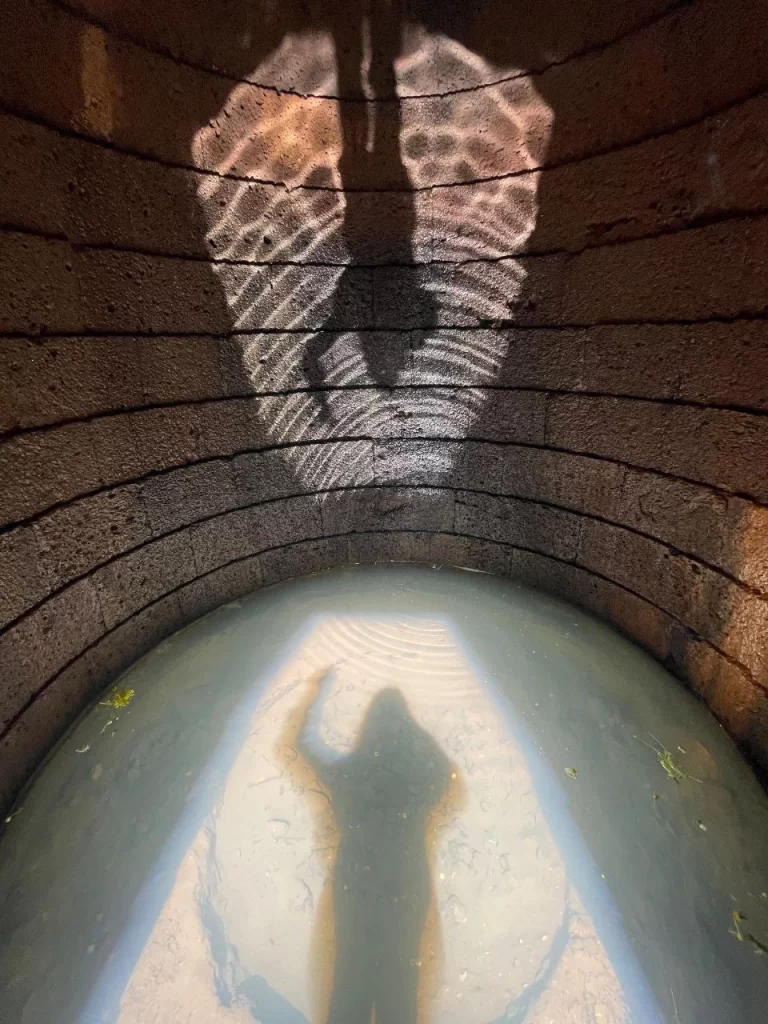
One of the most surprising aspects of the equinox at Santa Cristina is the optical phenomenon of the inverted shadow. Due to the angle at which sunlight penetrates the staircase, a person’s shadow can appear reflected upside down within the chamber.
This visual effect enhances the sense of mystery and wonder, reinforcing the perception of sacredness and the connection between human presence and natural forces.
Rituals and Collective Gatherings
Although no written records from the Nuragic people survive, archaeological findings—such as bronze figurines, ceramics, and ritual objects—suggest that astronomical events like the equinox were likely celebrated with collective rites:
- Votive offerings placed in the water
- Prayers and invocations for agricultural fertility and community well-being
- Social and ceremonial gatherings strengthening group identity
The equinox was therefore not merely an astronomical observation, but a communal and spiritual moment linking people to one another and to nature.
Universal Symbolism
Solar alignments similar to that of Santa Cristina appear in other ancient civilizations—Egyptian, Mesopotamian, and pre-Columbian—indicating a widespread perception of nature as divine manifestation, where light and water became ritual instruments.
In Sardinia, however, the integration of architecture, water, and natural landscape is especially striking. While other sacred wells exist across the island, the Sacred Well of Santa Cristina remains among the best preserved and most structurally refined examples.
The equinox at Santa Cristina is not simply an astronomical phenomenon. It is a meeting point of culture, religion, nature, and science—a moment when sunlight illuminates not only water, but also the history and identity of a timeless place.
To visit the site during the equinox is to encounter the cosmic vision of the Nuragic world, to understand the sacred importance of water, and to appreciate the harmony between architecture, landscape, and sky. And for those fortunate enough to witness the inverted shadow, the experience gains an additional touch of magic—an unforgettable encounter with the mystery and sacredness of ancient Sardinia.