Sardinia is not only about Caribbean-like beaches and turquoise waters. The island also preserves an extraordinary historical and archaeological heritage. The Oristano area best expresses this ancient soul, with evidence spanning from the Nuragic age to the Roman and Byzantine periods.
Following this itinerary, you will discover places filled with charm and mystery: from the Sacred Well of Santa Cristina to Nuraghe Losa, from the Phoenician city of Tharros to the Roman Baths of Fordongianus, and finally the Giants of Mont’e Prama. It is a true journey through time, immersed in wild nature, millennia-old history, and myths that still captivate today.
The Sacred Well of Santa Cristina: A Temple Dedicated to Water and the Stars
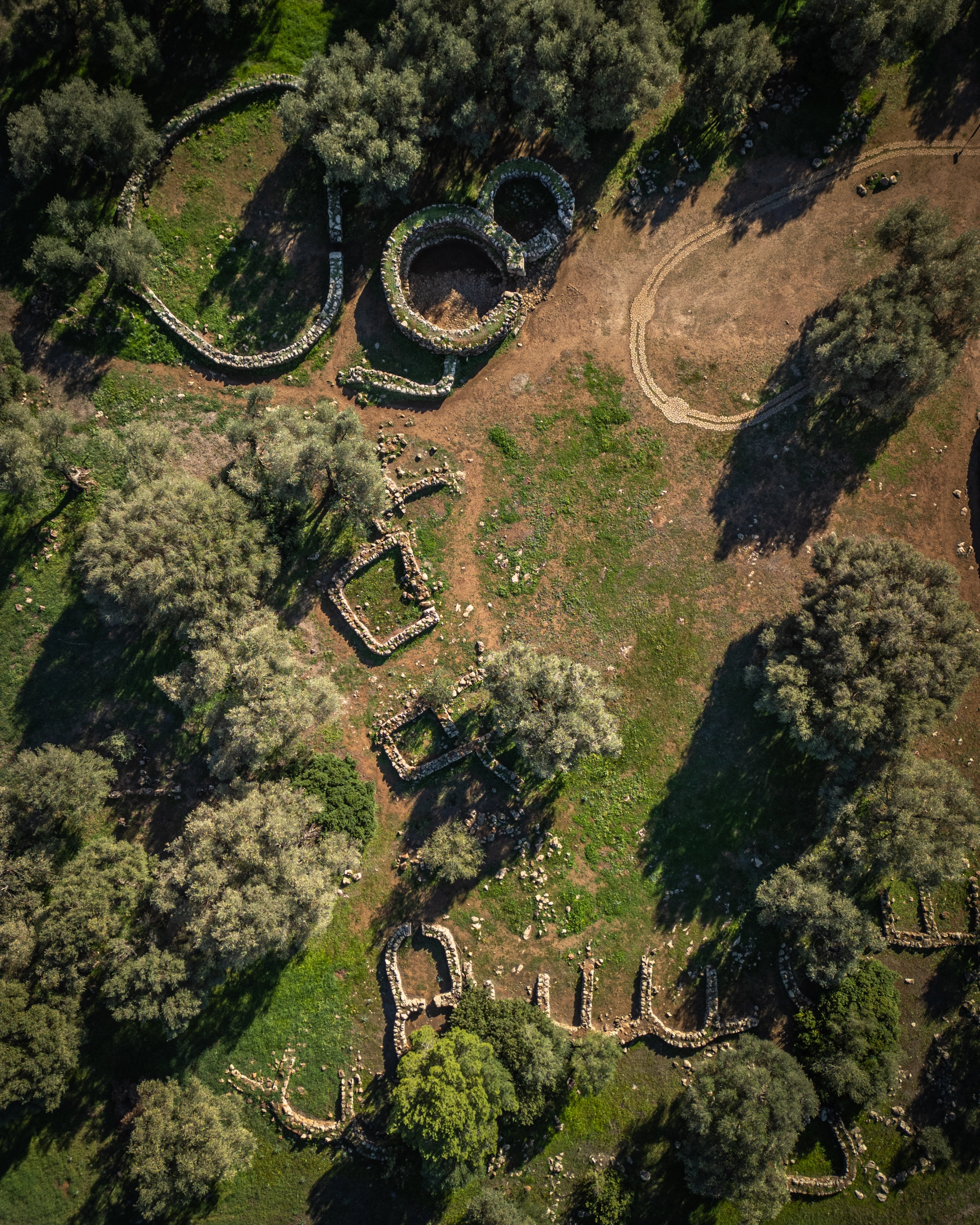
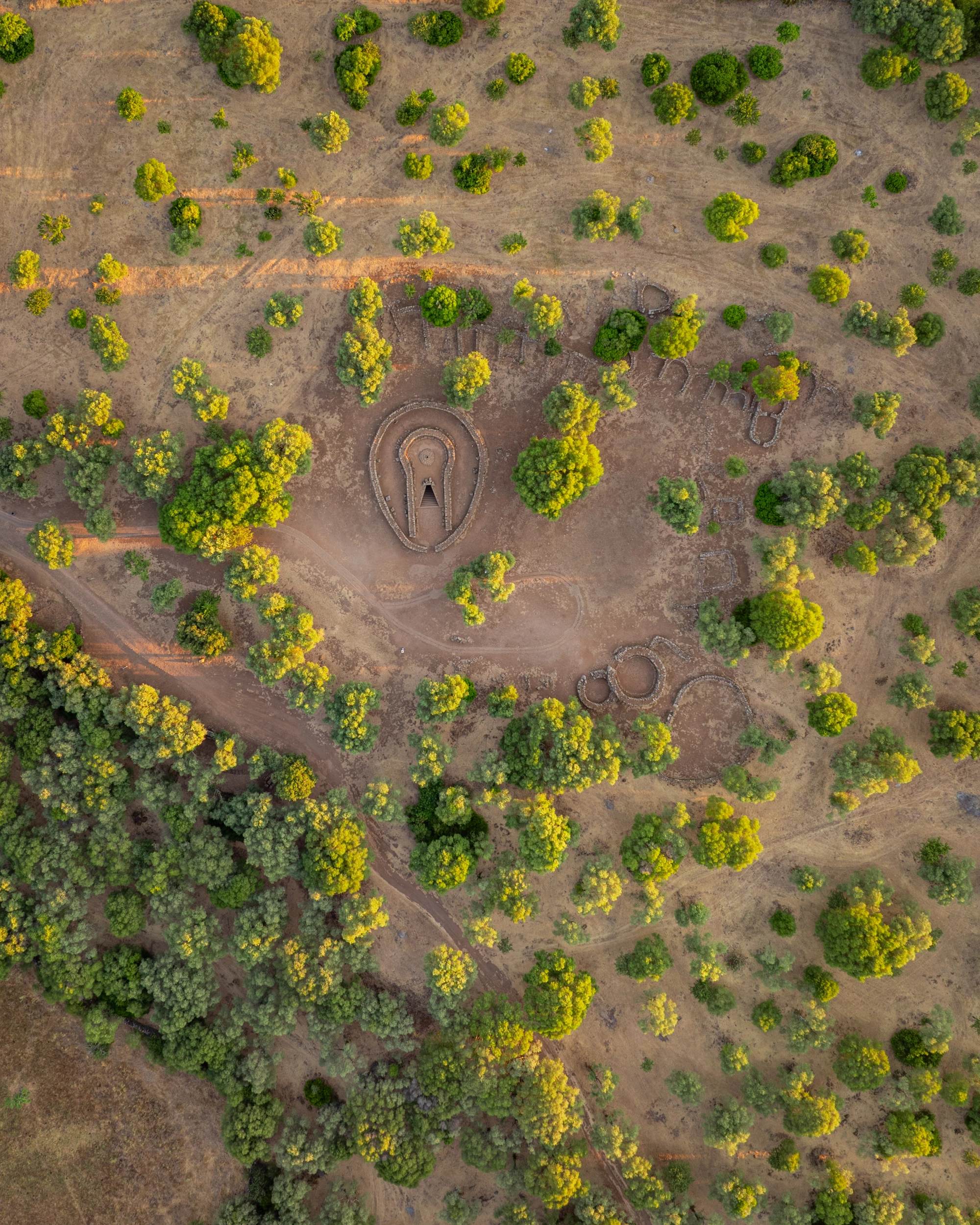
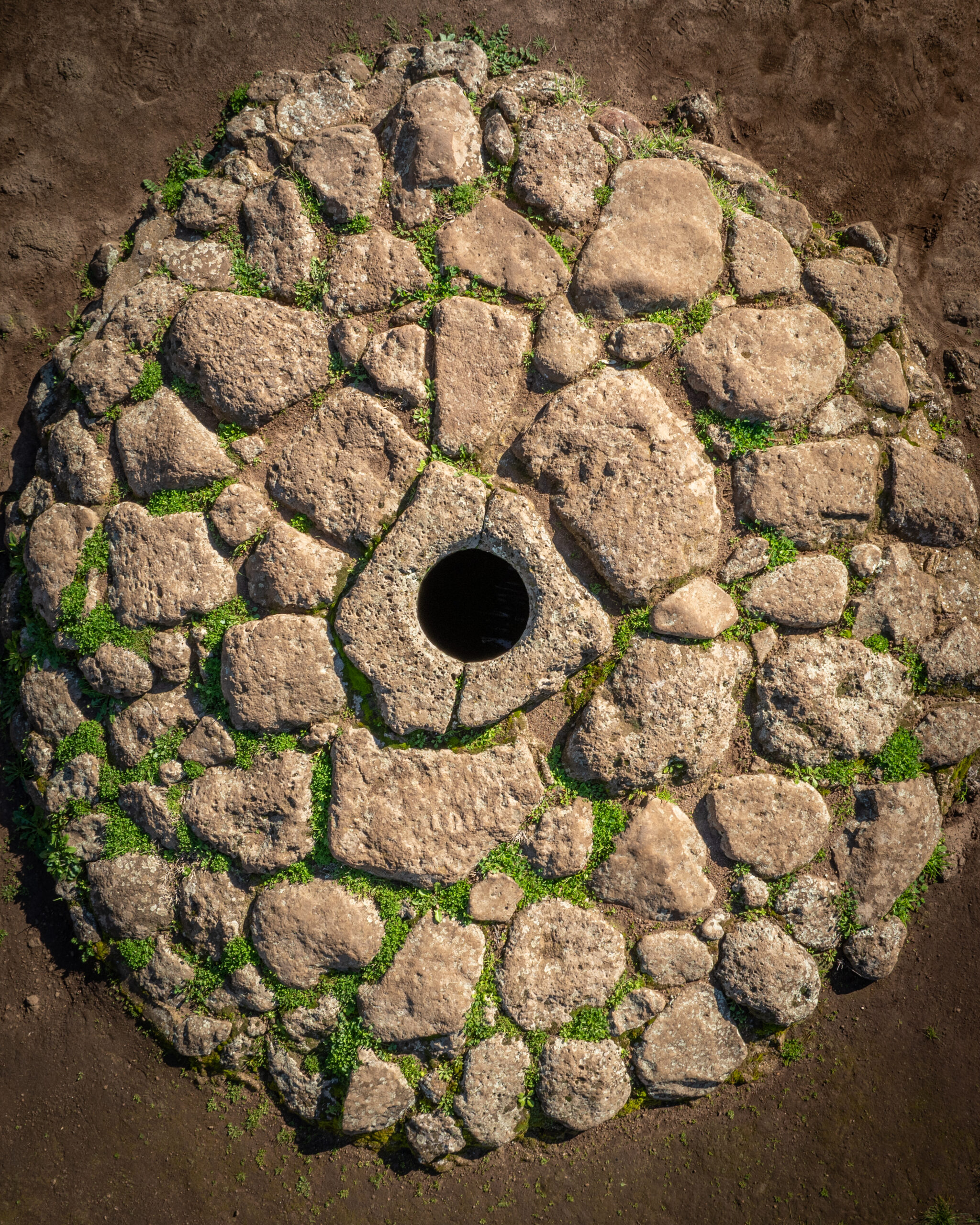
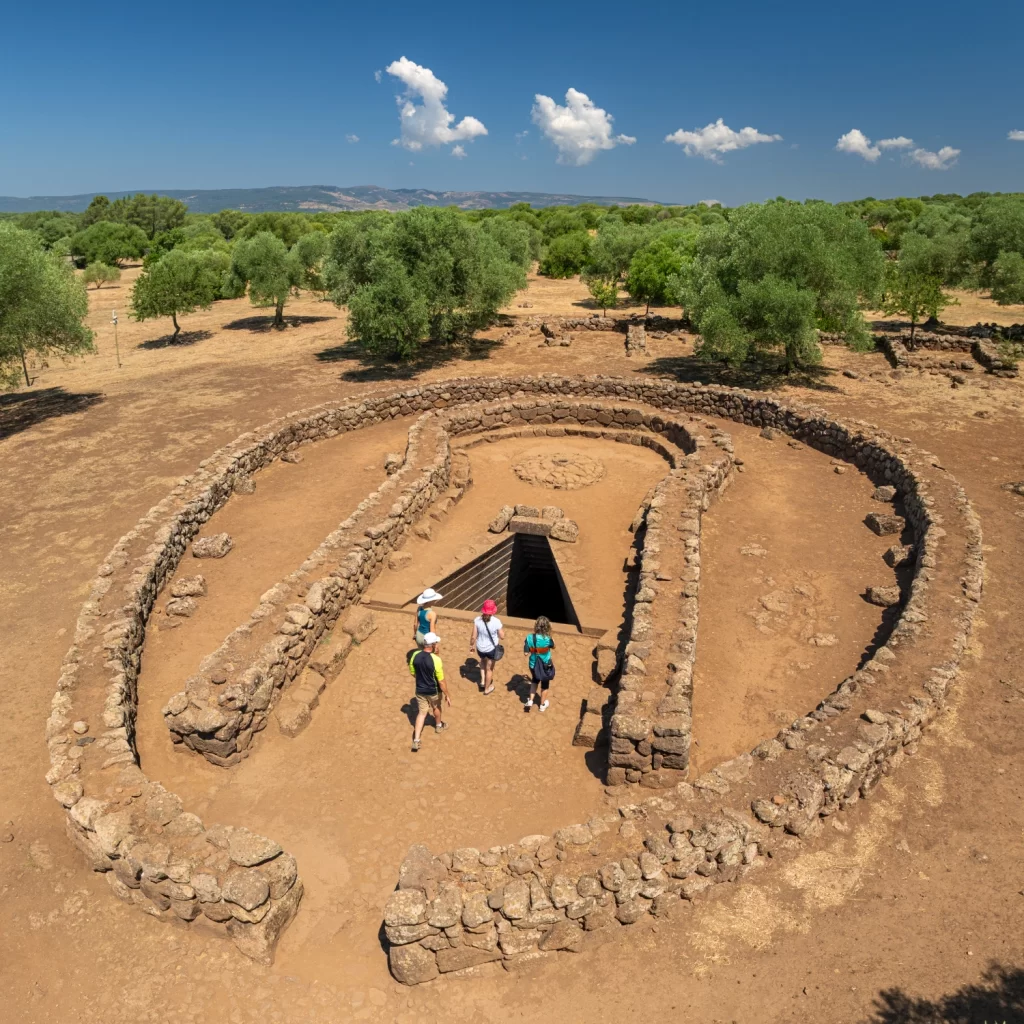
The first stop is the Sacred Well of Santa Cristina Archaeological Site in Paulilatino. This Nuragic sanctuary dates back to the 12th–9th century BC and fascinates visitors with its architectural precision and symbolic significance.
The site features a trapezoidal staircase descending to an underground chamber with a perennial spring. Water was sacred to the Nuragic people and stood at the center of religious rituals and ceremonies linked to astronomical cycles. Here, equinoxes and lunar standstills were celebrated, when the sun and moon reflected perfectly within the structure.
Beyond its religious role, the well functioned as a meeting and pilgrimage center, gathering communities from across the territory. Walking among the remains of the Nuragic village and admiring the temple’s geometric perfection feels like stepping back three thousand years.
Nuraghe Losa: A Stone Fortress in the Heart of the Oristano Area
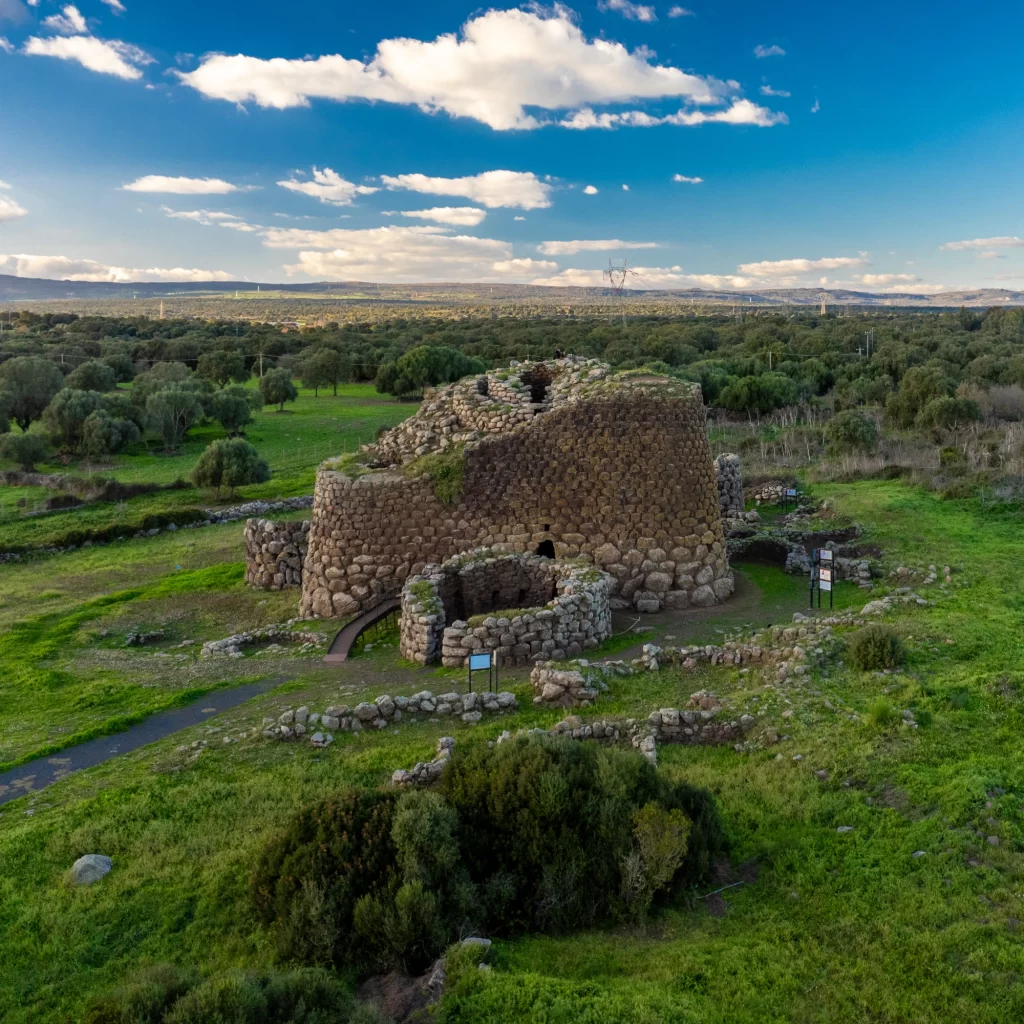
A few kilometers away, on the basalt plateau of Abbasanta, stands Nuraghe Losa. Built between the 15th and 13th centuries BC, it is one of the most imposing and best-preserved Nuragic structures in Sardinia.
The trilobate complex features a central keep surrounded by three towers connected by curtain walls. Around it extended a bastion and a village, testifying to the site’s strategic and social importance. Its triangular silhouette resembles the prow of a ship carved in stone.
Excavations begun in the 19th century have uncovered pottery, tools, and human remains, revealing an organized community and a structure used for centuries both as a fortress and as a residential center. Visiting Nuraghe Losa allows you to experience firsthand the grandeur of Nuragic civilization.
Tharros: The Phoenician City Overlooking the Sea
Continuing toward the west coast, on the Sinis Peninsula, lies Tharros. Founded by the Phoenicians in the 8th century BC, it later came under Carthaginian, Roman, and Byzantine control.
Walking through its ruins means immersing yourself in a unique landscape. Columns, paved streets, and the remains of houses overlook the Gulf of Oristano, creating a natural amphitheater by the sea.
Tharros was an important commercial port and prospered for centuries before being abandoned in the 11th century AD due to Saracen incursions. Today, visitors can explore the Phoenician tophet, necropolises, temples, Roman baths, and residential quarters.
The site beautifully combines history and nature: the crystal-clear sea and the beaches of Sinis frame one of the island’s most magical places.
The Roman Baths of Fordongianus: The Cult of Well-Being
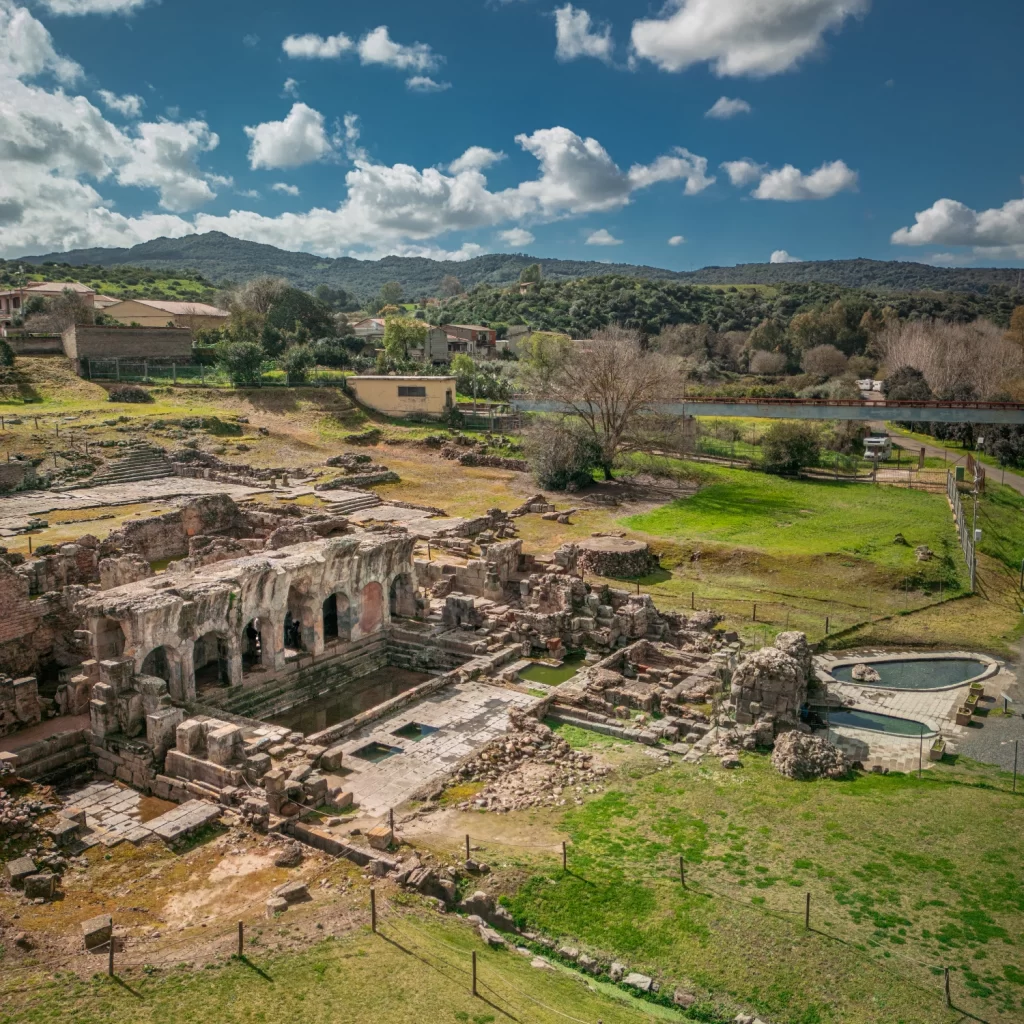
Heading inland along the Tirso River, you reach the Roman Baths of Terme Romane di Fordongianus. This thermal complex reflects the strong Roman connection with natural hot springs.
Known in antiquity as Aquae Ypsitanae and Forum Traiani, the baths date from the 1st–3rd century AD and exploited springs reaching temperatures of approximately 54–56 °C.
The main rooms included:
- the caldarium (hot baths),
- the tepidarium (warm baths),
- the frigidarium (cold baths).
Mosaic decorations, statues, and a nymphaeum dedicated to the nymphs reveal the close relationship between physical well-being and sacred dimension in Roman culture.
Today, strolling among the stone pools and ruins surrounded by greenery offers an authentic glimpse into Roman daily life.
Mont’e Prama: The Giants of Nuragic Memory
The final stop is Mont’e Prama, an extraordinary necropolis near Cabras. Discovered in 1974, it yielded fragments of monumental statues dating back to the 9th–8th century BC: the famous Giants of Mont’e Prama.
These stone sculptures are among the oldest large-scale statues in the Mediterranean after Egyptian examples, predating the Greek kouroi. They depict boxers, archers, and warriors—symbols of strength and sacredness—alongside models of nuraghi and betyl stones.
Over two meters tall, the statues likely stood as guardians of the necropolis. Today, 38 reconstructed Giants can be admired in the museums of Cabras and Cagliari. Seeing them up close is a powerful experience: these Giants preserve the memory of the Nuragic world.
A Journey Through History, Nature, and Sardinian Identity
The Oristano area is far more than sea and postcard landscapes. It is a land shaped by stone, water, and myth. This archaeological itinerary is a true journey through time, bringing distant eras back to life through unique places.
From the sacred cult of the well at Santa Cristina to the cyclopean architecture of Nuraghe Losa, from the ruins of Tharros to the Roman baths and the Giants of Mont’e Prama, each stop narrates the millennia-old story of Sardinia.
For those who love history, archaeology, and landscapes where nature and culture intertwine, the Oristano region is an irresistible destination. This itinerary is not merely touristic—it creates a dialogue between past and present, revealing the authentic soul of one of the most fascinating regions of the Mediterranean.