Discover why the famous Sacred Well of Santa Cristina bears this name and the religious traditions that still enliven the adjacent Christian village today.
Origins of an Ancient and Christian Name
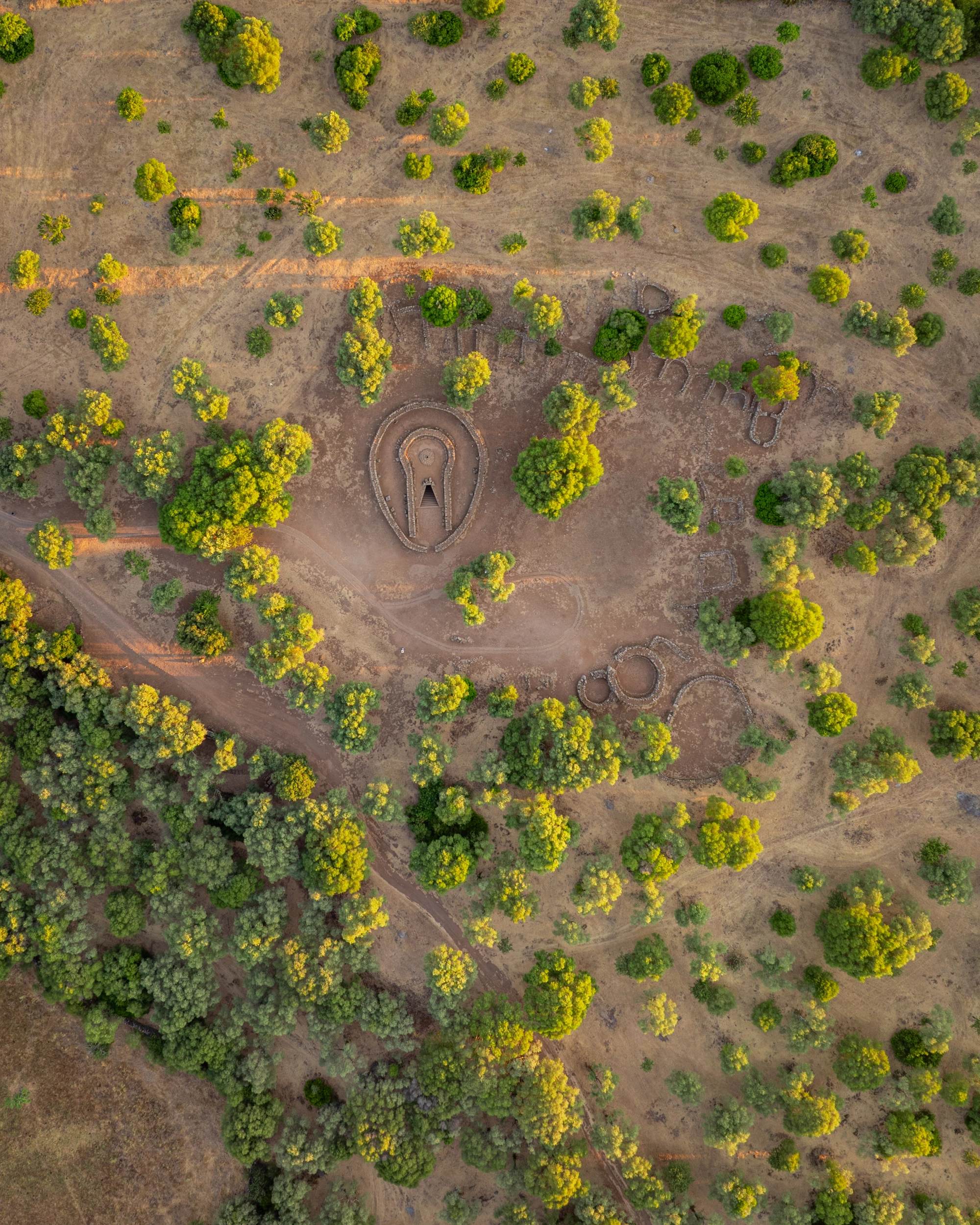
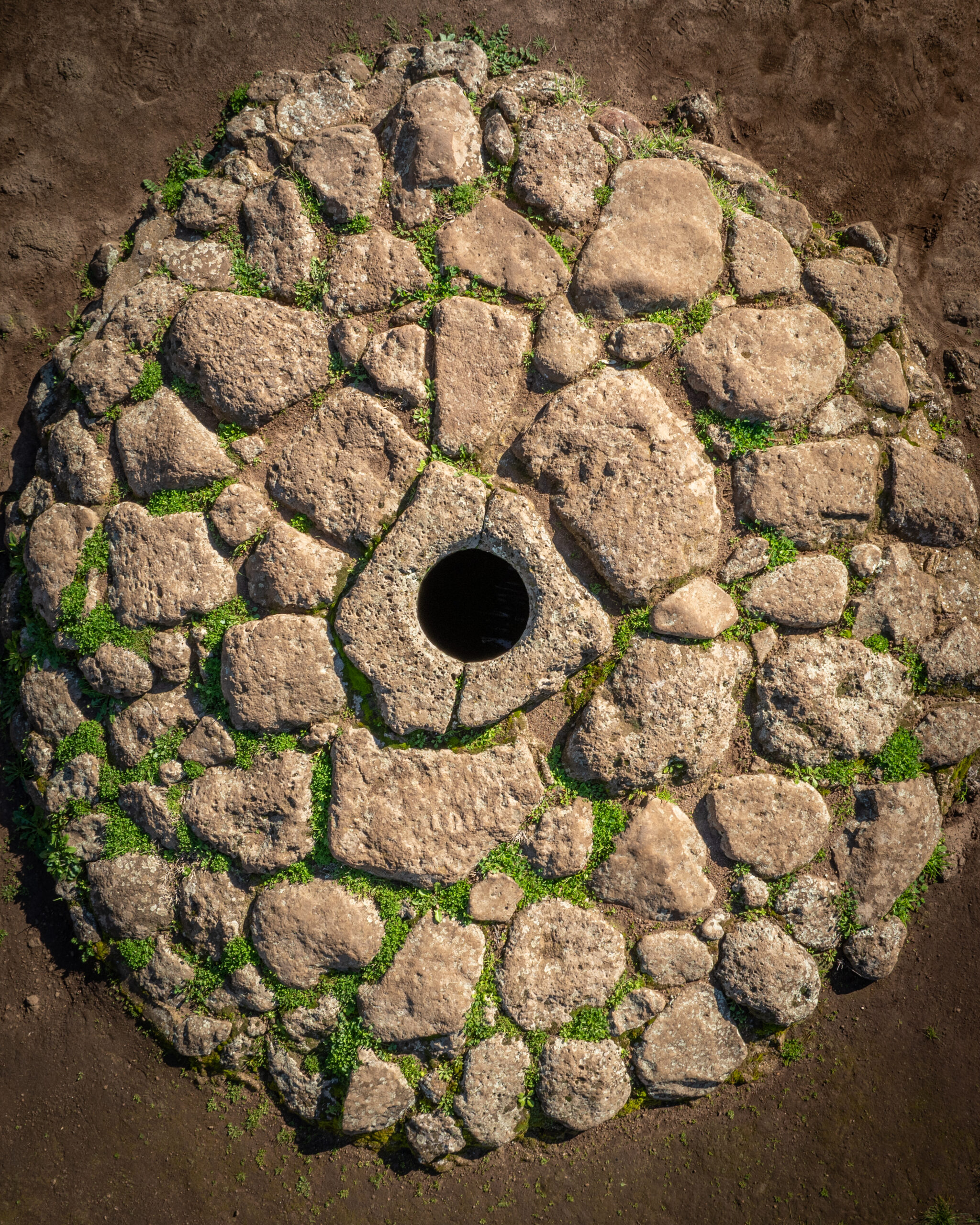
The Sacred Well of Santa Cristina Archaeological Site, one of the most fascinating archaeological sites in Sardinia, carries a name that may initially seem surprising. The association between a monumental work from the Nuragic age (12th–9th century BC) and a Christian saint appears to belong to two very distant worlds. Yet it is precisely this union between prehistoric sacred space and Christian tradition that explains the long and complex history of the site.
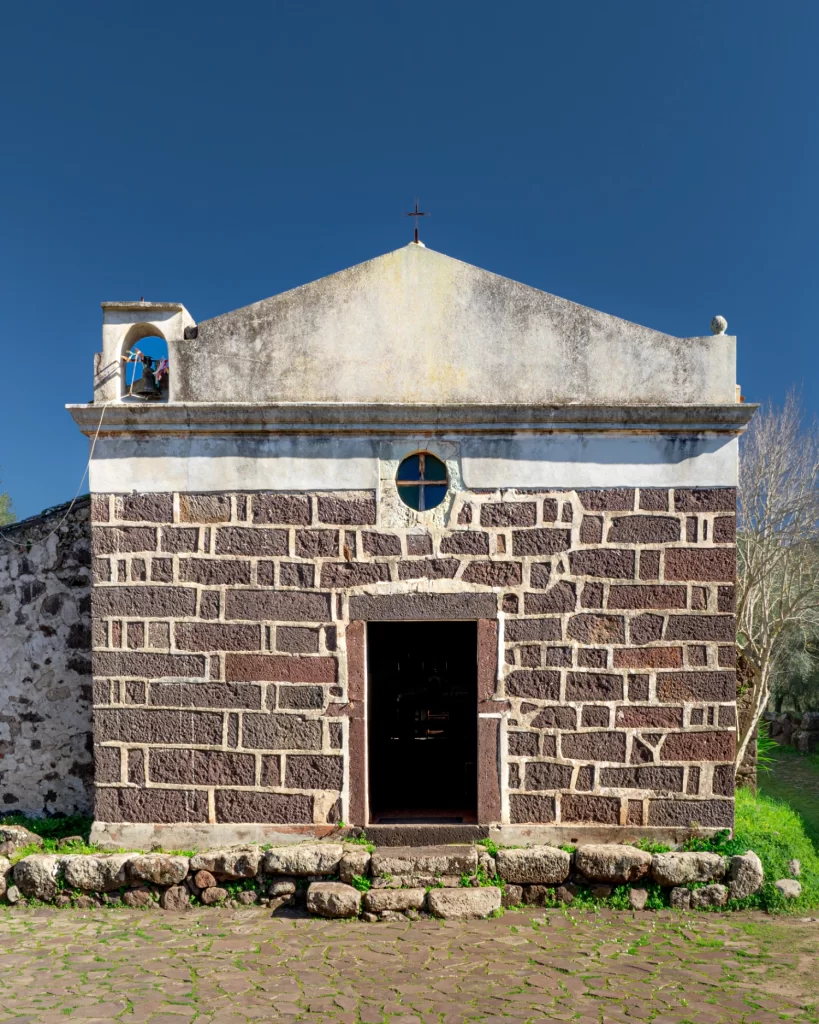
The name “Santa Cristina” derives from the small medieval Christian village that arose beside the Nuragic sanctuary. Around the year 1000, the area was reused as a place of worship and pilgrimage. At the center of this new religious settlement, a small rural church was built and dedicated to Christina of Bolsena, a martyr who died in 295 AD. Venerated throughout central Italy, her cult spread to Sardinia thanks to monastic movements and connections with regions such as Lazio and Umbria.
The overlap of sacred traditions is a common phenomenon in religious history: places already perceived as special in ancient times are reinterpreted and adopted by new faiths. Thus, the Nuragic sanctuary devoted to water worship gradually became a Christian village, without ever losing its spiritual centrality.
The Christian Village of Santa Cristina
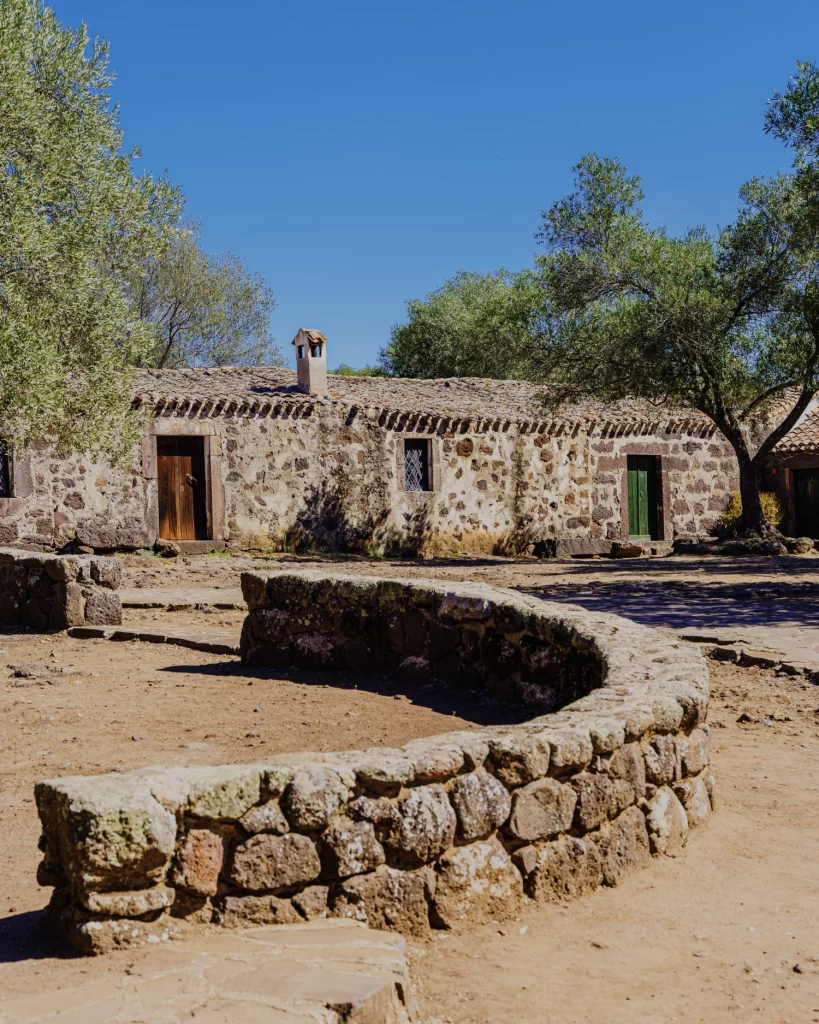
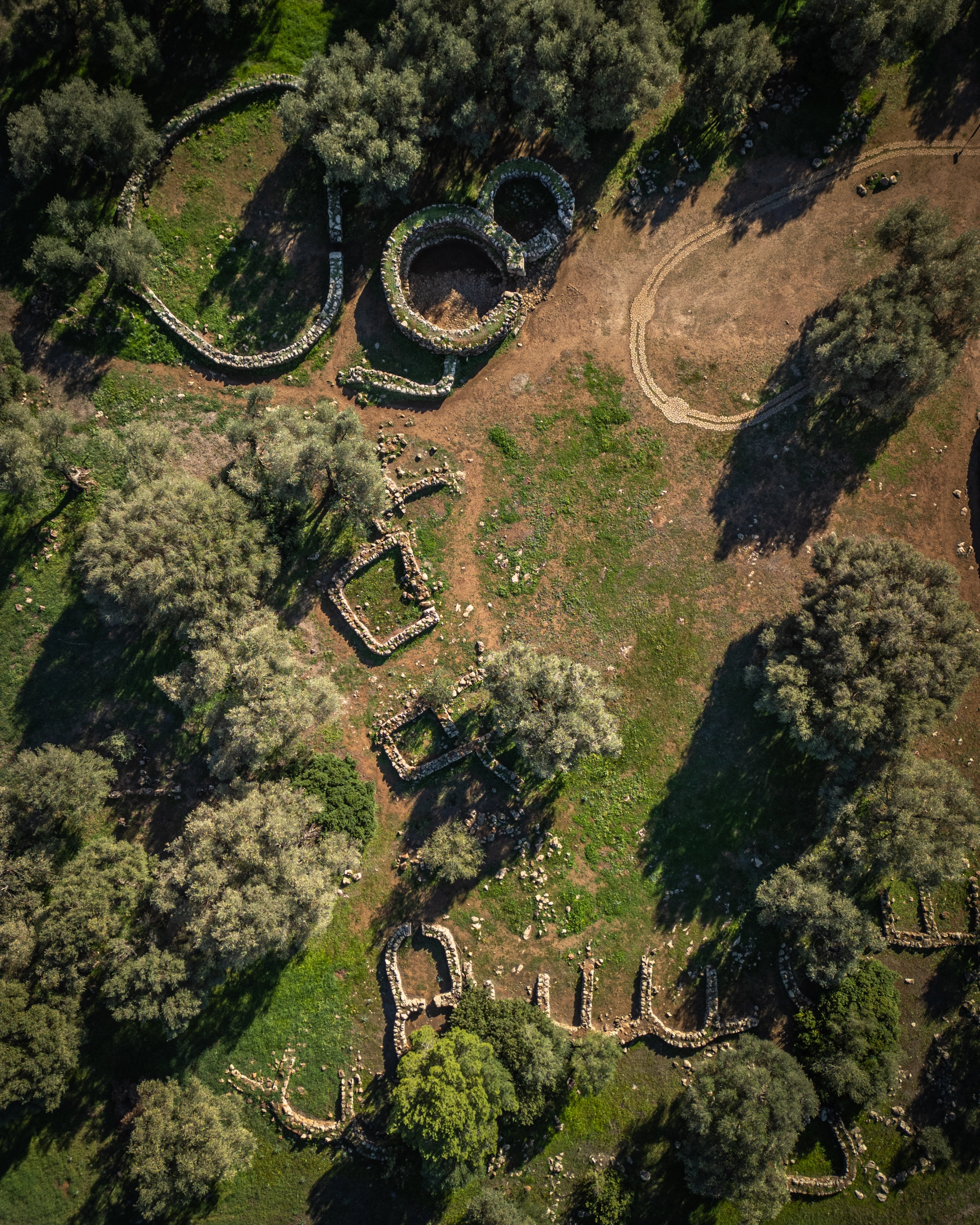
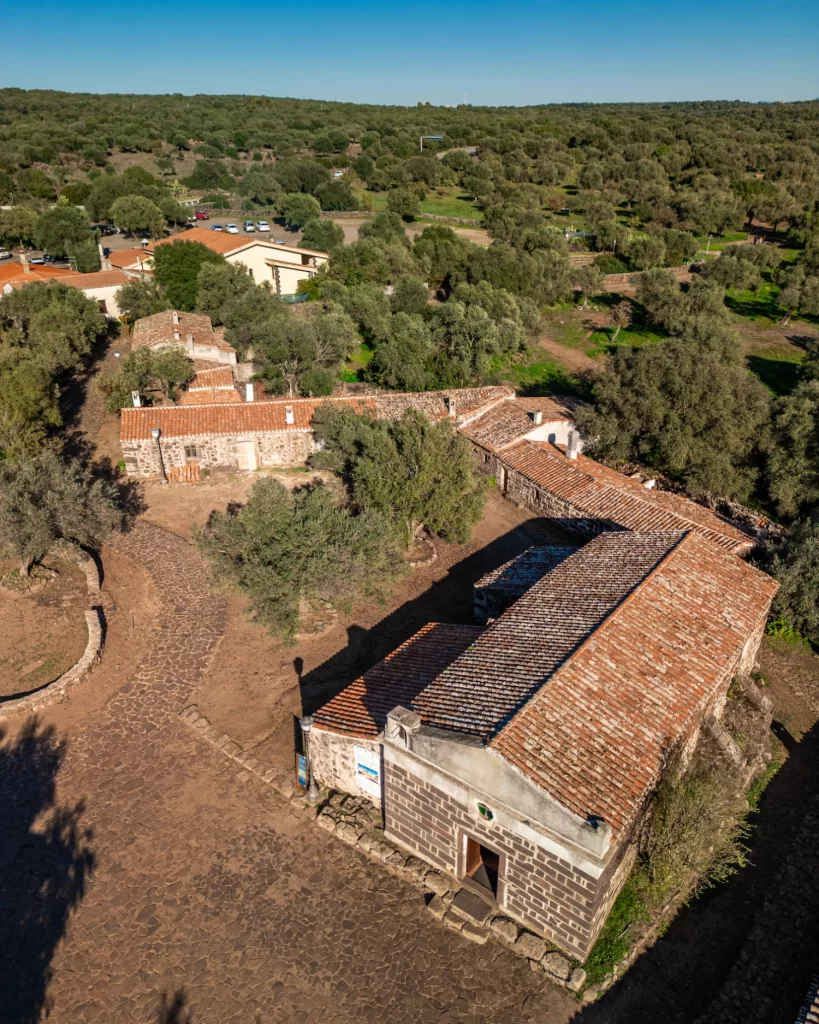
The small Christian village consisted of a series of muristenes—stone houses arranged around the church—designed to host pilgrims during religious festivities. Even today, these dwellings are used during celebrations and represent an extraordinary example of continuity in the use of a sacred space.
The Church of Santa Cristina, built in Romanesque style, is a simple structure made of dark volcanic stone, probably erected between the 12th and 13th centuries. Despite its architectural simplicity, it holds strong symbolic value, having become the heart of the religious community that still gathers here during festive occasions.
The Religious Festivals
Today, the Christian village of Santa Cristina comes alive especially during the celebrations dedicated to the saint, which take place twice a year:
- Second Sunday of May → Feast in honor of Saint Christina, attracting local faithful and pilgrims.
- Fourth Sunday of October → Feast in honor of the Archangel Raphael (locally known as San Serafino), one of the most deeply felt celebrations in the territory of Paulilatino and its surroundings, drawing hundreds of participants.
During these days, the muristenes fill with families and pilgrims who gather to share moments of devotion, conviviality, and tradition. Masses, processions, and religious rites alternate with communal meals, music, and folk dances, recreating an atmosphere that blends faith and social life.
The festival is also an opportunity to renew the bond between the community and its land, reinforcing a continuity of worship that for over three thousand years has made this site a spiritual center: once linked to water and Nuragic deities, today to a Christian saint.
Syncretism Between Nuragic and Christian Sacred Traditions
The dedication of the site to Saint Christina never completely erased the memory of its Nuragic past. On the contrary, many scholars emphasize that the overlap of cults was not a simple replacement, but rather a transformation. The springs and water, considered sacred by the Nuragic people, maintained a ritual dimension within Christianity—albeit with a different symbolic meaning.
Water, an element of purification in pagan rites, also became a symbol of baptism and rebirth in Christian tradition. In this sense, the site of Santa Cristina represents a unique example of sacred continuity across different eras and cultures.
Paulilatino and the Role of the Sanctuary Today
The Christian village and the Church of Santa Cristina are located in the territory of Paulilatino, a village in the Guilcier region known not only for its ancient history but also for its enduring agricultural and pastoral culture.
Today, the sanctuary of Santa Cristina is not only one of the most visited archaeological destinations in Sardinia, but also a living place of spirituality and identity for the local community.
Every pilgrimage, every religious celebration, and every tourist visit helps maintain the connection with the past and strengthen the cultural value of the site, which stands out as a rare example of historical stratification—from the Nuragic age to the medieval period, and into the present.
Memory and Tradition
The Sacred Well of Santa Cristina owes its name to the medieval Christian village and the rural church dedicated to the martyr of Bolsena. The religious festivals still celebrated twice a year confirm the vitality of the place and its central role in collective memory.
Visiting Santa Cristina means embarking not only on a journey into Nuragic archaeology, but also into the Christian traditions of Sardinia—where faith, history, and identity continue to intertwine.